Home > Blog > Collision Repair > What to Do After a Car Accident in Florida
Share this post:
Bumper Damage?
Get a Written Estimate
Bring your car in for an inspection, and we'll itemize every part, sensor and finish your bumper repair involves.
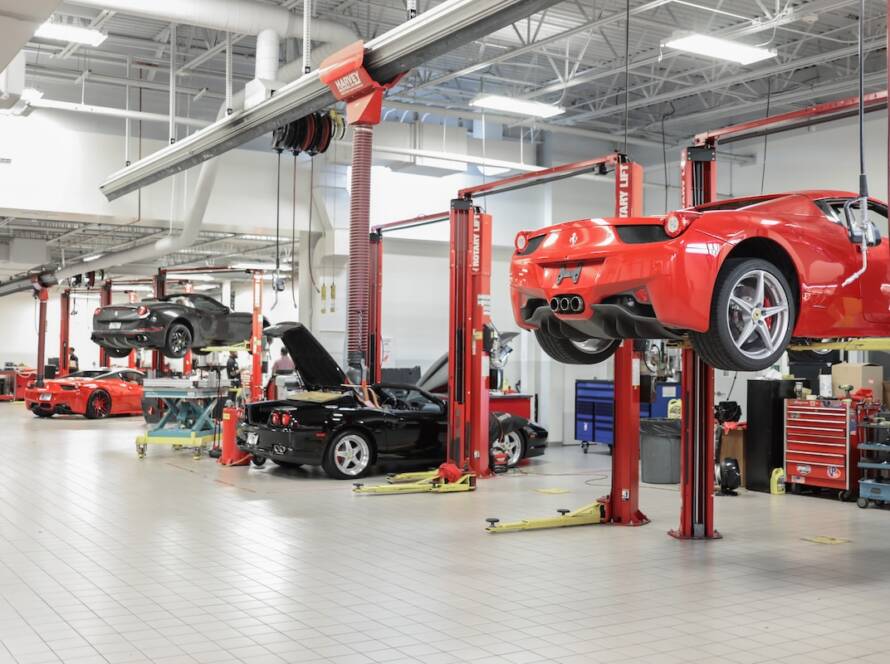
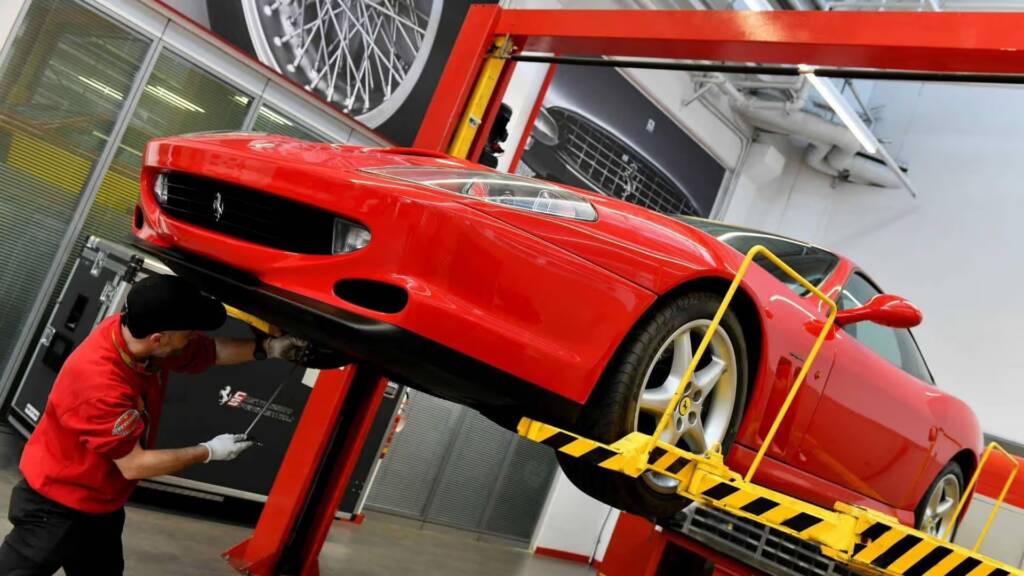
Inspections at our Pompano Beach facility.
Quick Takeaways
- Report it: Florida requires a police report for any crash with injuries or apparent damage of $500 or more, which covers almost every luxury car.
- See a doctor within 14 days: Florida’s PIP coverage generally only pays if you get medical care within 14 days.
- You choose the body shop: Your insurer can recommend shops, but Florida law lets you decide.
- Get the car towed right: Low-clearance cars should go on an enclosed, low-angle flatbed, not a standard tow truck.
Table of Contents
The first hour after an accident shapes everything that follows: your insurance claim, your medical coverage, and how your car gets repaired. Here’s what to do after a car accident, step by step, plus what happens to a luxury or exotic car once it leaves the scene.
Your Accident Checklist
At the Scene
- Check for injuries and call 911 if anyone is hurt.
- Move out of traffic if it's safe, then call the police and get the report number.
- Exchange information and photograph the damage, both cars, and the scene.
- Ask for an enclosed flatbed. A standard tow truck can damage a low-clearance car.
In the First Few Days
- See a doctor within 14 days so your PIP coverage applies.
- Open your insurance claim, and confirm your deductible and rental coverage.
- Choose your body shop. In Florida, you decide, not your insurer.
- Ask about diminished value if the other driver was at fault.
General information, not legal advice. For injury claims or disputes, talk to a Florida attorney.
How Insurance Works After a Car Accident
Your injuries: Your own PIP coverage pays first, up to $10,000, no matter who caused the crash.
Your car: The at-fault driver’s insurance pays for repairs. If that’s you, your collision coverage pays, minus your deductible.
The exotic car catch: Florida only requires drivers to carry $10,000 in property damage coverage. Exotic repairs often cost far more, so your own collision coverage may need to cover the gap.
Why Luxury and Exotic Cars Need Extra Care
Damage hides deeper. Aluminum and carbon fiber can hide structural damage under a small dent, so expect the estimate to grow after teardown.
Repairs need the right equipment. Bent aluminum needs frame repair on a bench jig, and bumper sensors need ADAS calibration.
Paint is layered. Factory finishes often have three or more coats that need precise color matching.
Value is on the line. Exotic cars lose more resale value after an accident, but a diminished value claim may recover some of it.
What Happens to Your Car Next
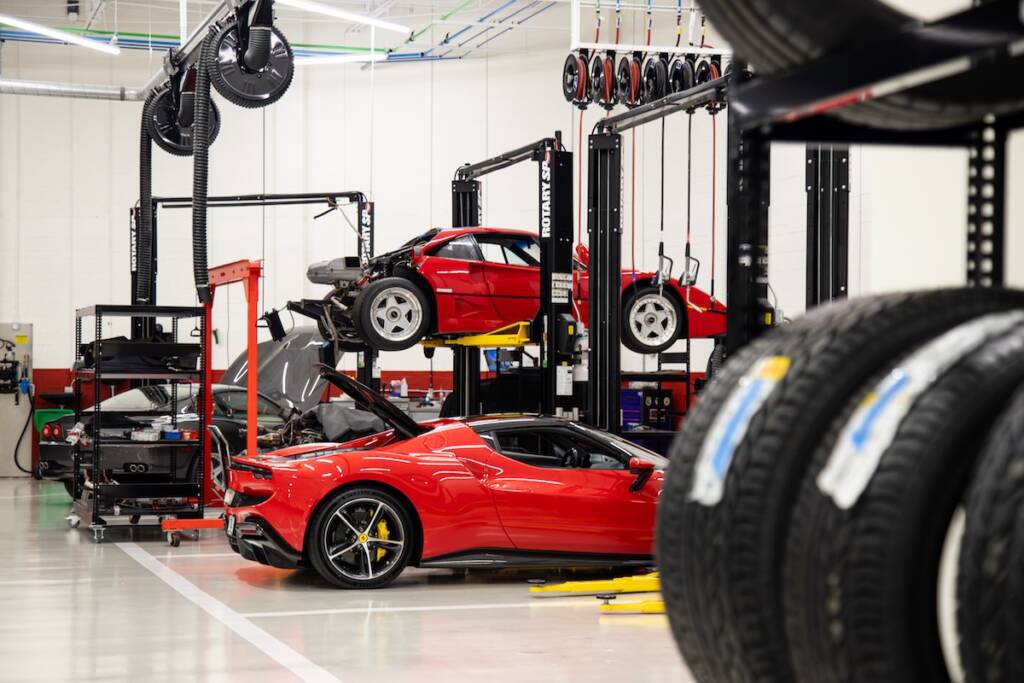
Once a luxury or exotic car reaches the shop, the repair follows a set order, and each step matters more than it would on an everyday car.
-
Teardown
Panels come off to find hidden structural, suspension, and wiring damage.
-
Structure
Aluminum and steel frames are measured and restored on a bench jig.
-
Paint
Factory color formulas, matched for depth and texture across every panel.
-
Calibration
Cameras, radar, and sensors are scanned, recalibrated, and verified.
-
Documentation
OEM parts and a complete repair file protect the car's resale value.
Car Accident FAQs
Do I have to report a car accident in Florida?
Yes, if anyone is hurt or the apparent damage is $500 or more. Repairs on most luxury and exotic cars pass that quickly.
Can I choose my own body shop in Florida?
Yes. Your insurer can recommend shops, but you decide where your car is repaired. See “How to Choose a Body Shop for a Luxury or Exotic Car“
Can there be hidden damage if the outside looks minor?
Yes. Structural, suspension, and sensor damage often only shows up once the car is taken apart.
Should a luxury or exotic car be towed differently?
Yes. Low-clearance cars need an enclosed, low-angle flatbed so splitters, skirts, and aero parts aren’t damaged during loading. See “Exotic Car Towing“
What if the other driver’s insurance won’t cover all the damage?
Your own collision coverage can usually pay the rest, minus your deductible. Your insurer may then pursue the at-fault driver to recover it.
Will my insurance pay for OEM parts on a luxury car?
It depends on your policy. Many policies allow aftermarket or used parts. Ask your insurer before repairs start, and ask your shop to document why OEM parts are required.
REPAIR INSIGHTS