Home > Blog > Aluminum Repair > Ferrari Flood Damage: Storms, Saltwater and Salt Air
Share this post:
Ferrari flood damage rarely announces itself. A car can be driven out of standing water, dried, and pass a road test — then start throwing faults weeks later as corrosion works through connectors that were never opened. The damage looks nothing like collision damage, and it is usually found long after the water has gone.
Quick Takeaways
Saltwater and aluminium are a bad combination.
Salt is an electrolyte, and a Ferrari space-frame already joins dissimilar metals.
Electronic damage surfaces late.
Modules can pass an initial inspection and fail weeks later as corrosion works through the contacts.
Never start a car that has been in water.
Cranking a wet engine turns a recoverable situation into a much worse one.
Table of Contents
Fresh Water Or Salt?
It is the first question, and it decides most of what follows. Fresh water damages what it touches. Saltwater keeps working after it drains.
Wind-driven rain
Fresh water
What it takes to return the car to pre-loss condition. Estimated, negotiated, and paid to the facility.
Storm surge
Saltwater
Introduces an electrolyte into the structure and every sealed cavity at once. Corrosion continues for months after the car looks dry.

Three Kinds Of Exposure
01
Salt aerosol
Settles continuously. Concentrates where moisture lingers — drain channels, seam edges, fastener heads, the underside.
Gradual ———
02
Wind-driven rain
Fresh water forced past door seals or through blocked drains. Reaches interior electronics and floor cavities.
Serious ———
03
Storm surge
Saltwater immersion. The most damaging by a wide margin, and the hardest to assess without disassembly.
Severe ———
What Saltwater Does
Every joint is a reaction site
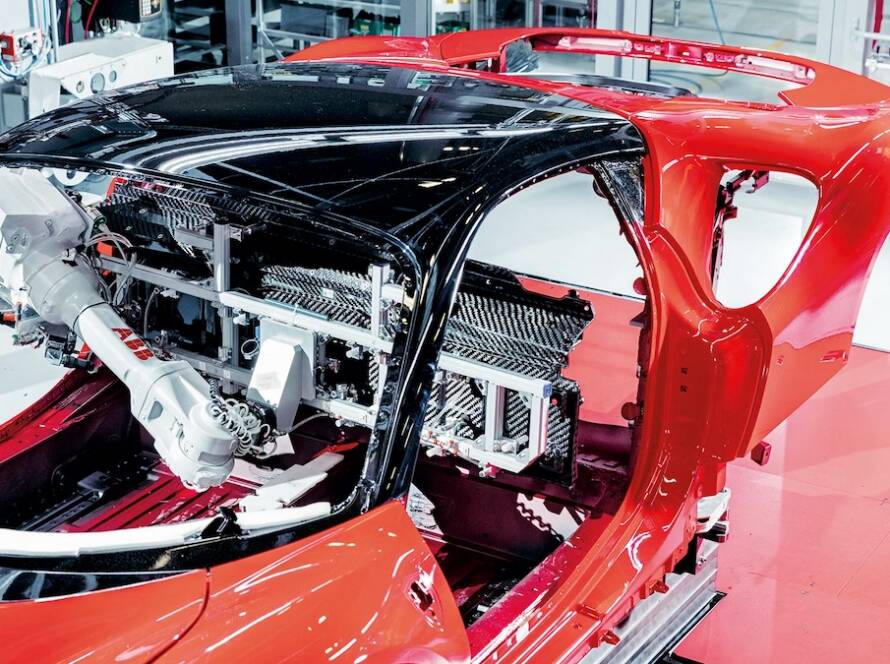
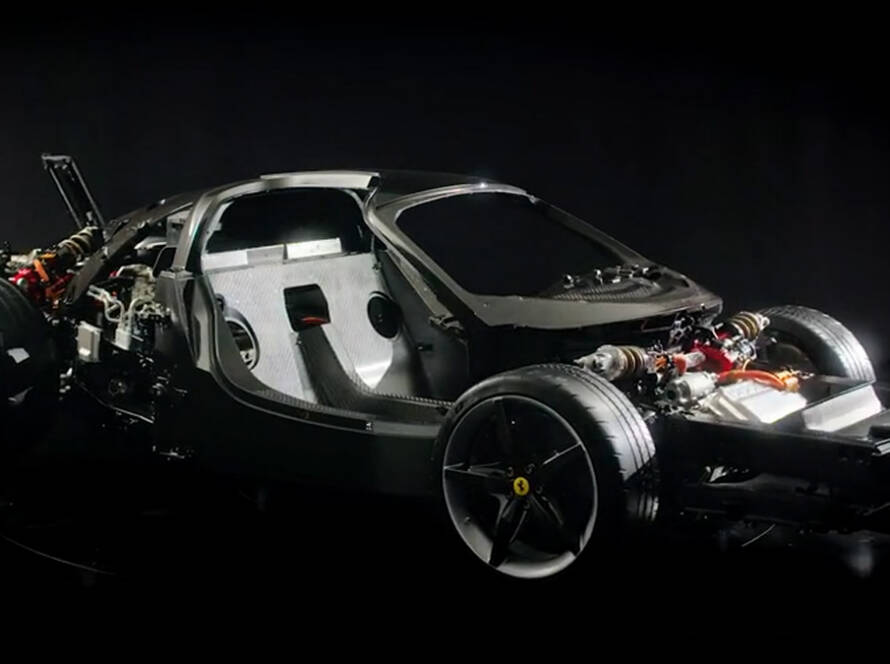
A modern Ferrari chassis is not one material. Aluminium sections are bonded and riveted, carbon assemblies mount into them, and steel fasteners run through the joints. Saltwater bridges those interfaces and starts corroding them.
Most of it is out of sight
The reaction happens inside the structure. A saltwater-exposed car cannot be assessed visually — cavities have to be opened and flushed, and sections checked against factory specification. See how aluminium space-frames are restored.
The electronics fail on a delay
Contamination enters multi-pin connectors and circuit assemblies. The car may drive and pass a road test, then throw intermittent faults weeks later. Sensors that were submerged cannot be assumed accurate — see why ADAS requires recalibration.
Repairable, or written off?
Insurers compare projected repair cost against value. Flood exposure makes that projection hard, so carriers often move to a total loss rather than carry an open-ended figure. A documented teardown gives you something specific to respond with.
| Repairable / At Risk | Repairable | At Risk |
|---|---|---|
| Fresh water below the sill line | ✓ | — |
| Dried and assessed within days | ✓ | — |
| Engine never cranked after exposure | ✓ | — |
| Saltwater above the floorpan | — | ✓ |
| Prolonged immersion | — | ✓ |
| Assessed months later, by symptom | — | ✓ |
Where the car is repairable, the teardown record also becomes part of its history file — which is where the value conversation starts. Covered separately in diminished value after a collision.
Before And After A Storm
01
Photograph the car before the season
Dated exterior, interior and engine bay images, plus mileage and service records. This is the baseline any later claim is measured against.
02
Move it to elevation, not just indoors
A ground-floor garage in a surge zone offers no protection from standing saltwater.
03
Do not attempt to start it
Cranking an engine that has ingested water, or energising a wet electrical system, is what converts a repair into a write-off.
04
Record the water line before it moves
Photograph the mark on the wheel, door and body. It establishes exposure depth and is hard to reconstruct later.
05
Arrange enclosed transport
Open transport adds road spray to a car that is already wet. Flat-bed enclosed recovery keeps the situation static.
06
Assess by disassembly
Cavities opened, connectors inspected, modules tested, structure checked against specification. A visual inspection is not an assessment.

Frequently Asked Questions
Can a flood-damaged Ferrari be repaired?
Sometimes, depending on depth, water type and duration. Fresh water limited to carpets and lower trim is frequently recoverable. Saltwater that reached the structure and electrical system is a much harder case, and the answer only becomes clear after disassembly.
How long after a storm does flood damage show up?
Corrosion and electrical faults commonly appear weeks to months later. Waiting for symptoms means the damage progresses while the claim window narrows.
Does salt air damage a Ferrari that is garaged?
It reduces exposure but does not eliminate it. Coastal aerosol enters through ventilation, and an unconditioned garage can hold moisture against the car. Regular washing including the underside does more than storage location alone.
My insurer declared it a total loss. Is that final?
Not necessarily. That determination rests on a projected repair figure, often made without a teardown. An independent documented assessment gives you specific findings to respond with.
Should the car be towed or driven after water exposure?
Towed, on an enclosed flat bed. Driving risks hydrolock, driveline contamination and further damage to wet electrical components.
From Recovery to Restoration
We provide 24/7 enclosed transport and structural, aluminium, carbon fibre and paint repair to Ferrari’s published procedures. If your car has been exposed to flooding, we can arrange recovery and a documented assessment.
REPAIR INSIGHTS