Salt air reaches inland year round. Between June and November, South Florida adds storm surge and wind-driven rain. The damage that follows looks nothing like collision damage, and it is usually found months after the water has gone.
A Ferrari that has been through a collision can lose value even after the bodywork is finished correctly. In Florida that loss is sometimes recoverable — but only if you can document it.
A Ferrari can be repaired after structural or “frame” damage, as long as the work is done using factory-approved procedures and specialized aluminum restoration techniques. Whether a component is repaired or replaced depends on where the damage is and how severe it is — not on the mere fact that structural damage occurred.
Ferrari Advanced Driver Assistance Systems (ADAS) are a network of cameras, radar units, ultrasonic sensors, and software that help monitor the road and support safer driving. Depending on the model, these systems can include: Adaptive Cruise Control
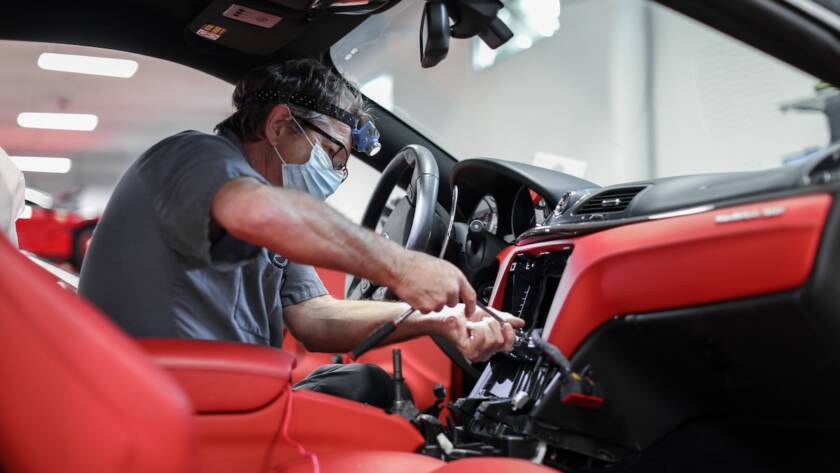
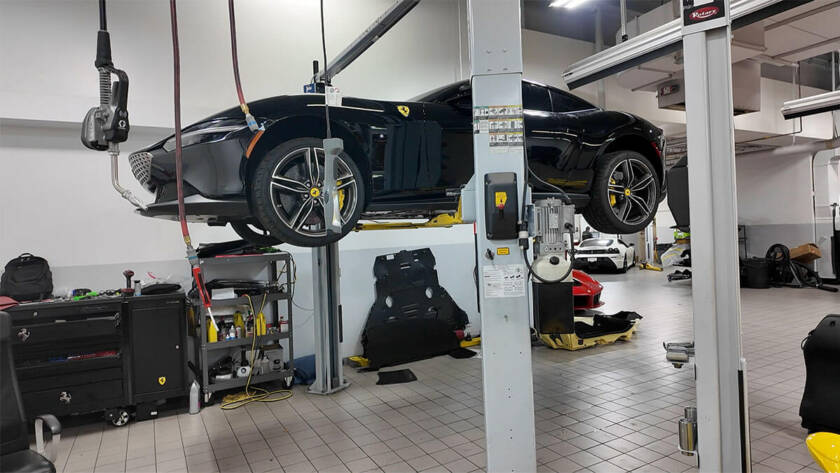
After a Ferrari accident, the vehicle typically undergoes enclosed transport, insurance review, structural disassembly, chassis restoration, refinishing, electronic calibration, and final factory validation.
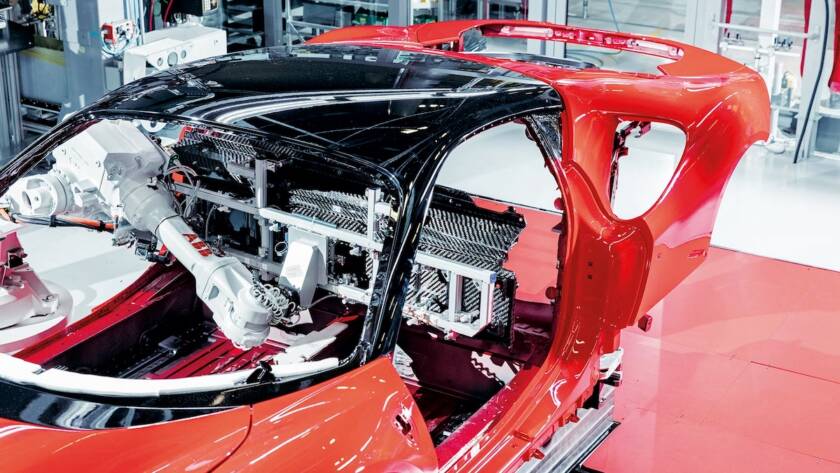
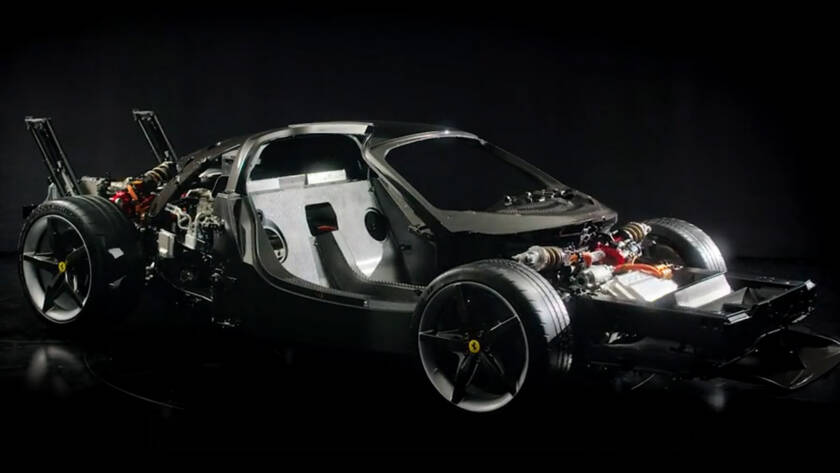
Because modern Ferrari vehicles utilize advanced aluminum structures, carbon fiber components, and integrated electronic systems, repairs often require specialized factory-authorized restoration procedures.
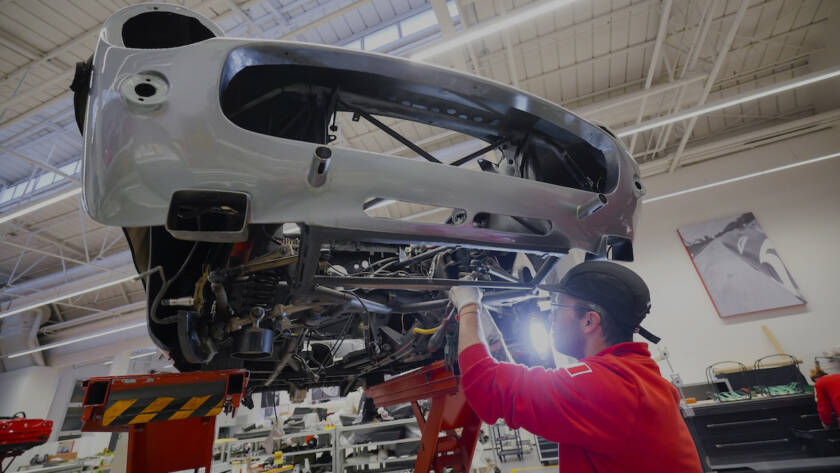
Ferrari aluminum space-frames can’t be restored the way conventional vehicles are. The alloys don’t tolerate uncontrolled heat or traditional frame pulling. Proper restoration relies on: Car Bench or Celette calibration platforms, Aerospace-grade bonding adhesives, Self-piercing riveting system. These aren’t upgrades — they’re requirements for returning the frame to its original dimensional behavior and load characteristics.
Home > Blog > Bench Jig System > Why Ferrari Structural Repairs Require Bench Jig Systems
Share this post:
Quick Takeaways
Mechanical fixturing: Anchor to steel fixture blocks — not chains
Zero-pull mandate: Hydraulic pulling fractures aluminum space-frames
Blueprint calibration: Celette/Car Bench platforms use Maranello's exact specs
Geometric validation: Every restoration closes with a…
Home > Blog > Paint Refinishing > How Ferrari Paint Matching Works Share this post:
Quick Takeaways
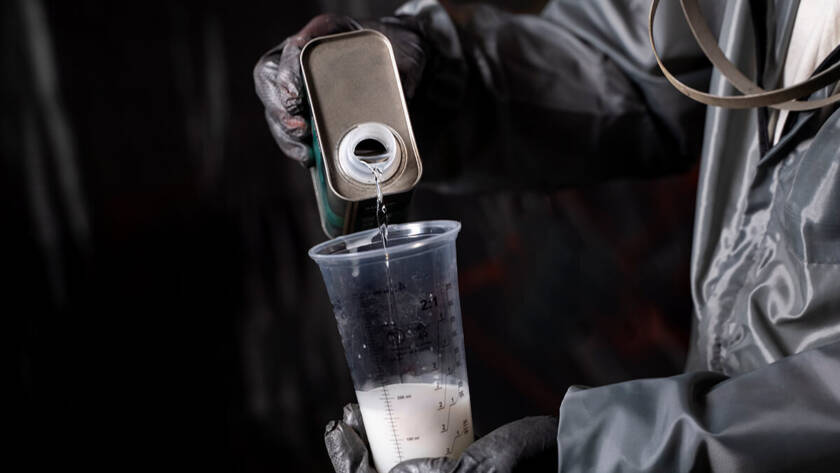
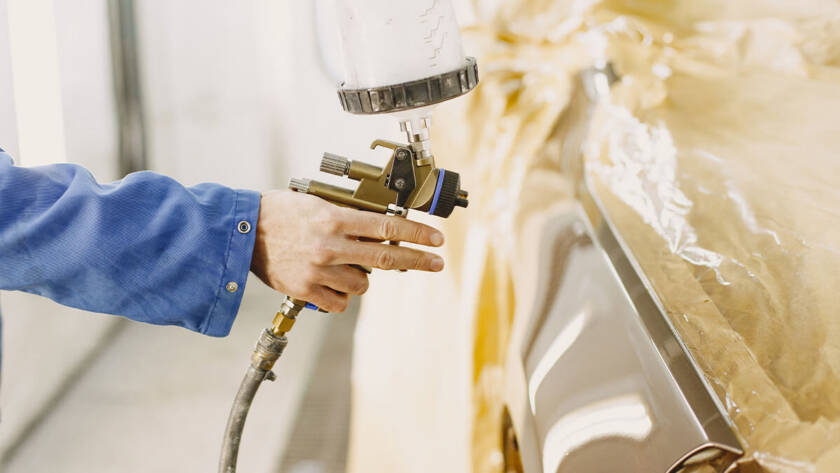
Formula synchronization: Ferrari color accuracy depends on factory PPG variant formulas Optical metamerism: Multi-angle scanning compensates for dramatic light-angle color shifts Texture profiling: Factory orange peel texture must match adjacent panels precisely Radar transparency: Paint thickness calibration preserves…
Ferrari owners should use OEM parts. Modern Ferraris are built around specialized alloys, carbon fiber assemblies, and dimensional tolerances that aftermarket manufacturers cannot fully replicate. Non-OEM or salvaged components risk compromising chassis behavior, sensor calibration, and long-term vehicle integrity.
Ferrari carbon fiber repairs differ fundamentally from aluminum because composite structures can’t be reshaped or thermally corrected like metal. Aluminum relies on precision calibration and specialized joining procedures. Carbon fiber requires resin bonding, ultrasonic inspection, controlled curing — and in many cases, complete replacement.
Ferrari chassis alignment affects high-speed stability because the platform is engineered around precise suspension geometry, aerodynamic balance, and millimeter-exact tolerances.
Home > Blog > Paint Refinishing > Why Ferrari Paint Cleanrooms Matter During Refinishing Share this post:
Quick Takeaways
Downdraft airflow: Vertical extraction removes airborne contaminants before they settle into fresh clearcoat Positive-pressure cleanrooms: Active cabin pressurization pushes outside shop air away during spray cycles Atmospheric stability: Strict temperature and humidity regulation ensures predictable waterborne…