Home > Blog > Aluminum Repair > Car Repair After a Flood: What to Do and What’s Fixable
Share this post:
Quick Takeaways
Saltwater is the dividing line.
Fresh water damages what it touches. Saltwater keeps corroding metal and wiring after the car looks dry.
Electrical damage shows up late.
Modules and sensors can pass an inspection and fail weeks later.
Never start a flooded car.
Cranking a wet engine can turn a repairable car into a total loss.
Table of Contents
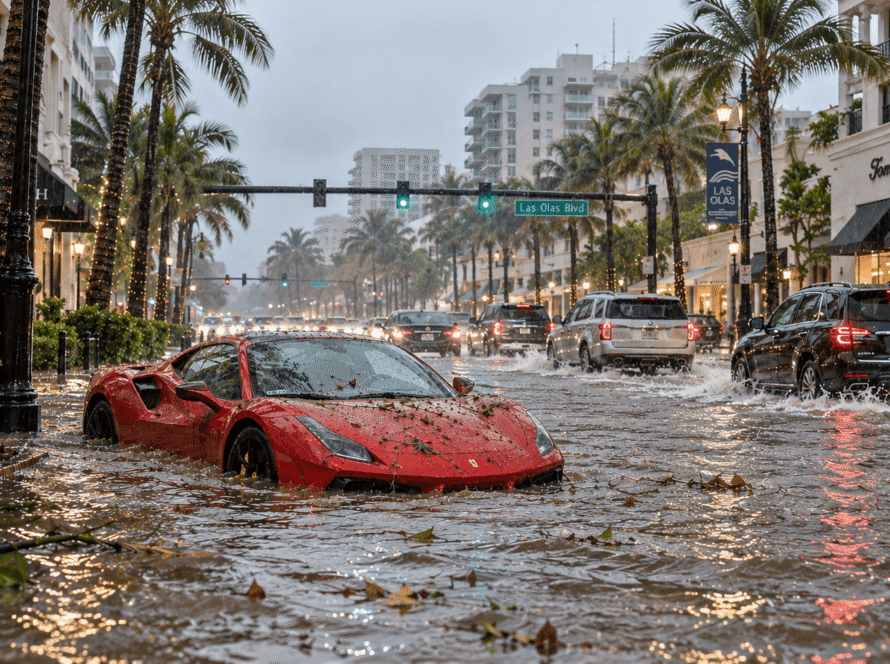
Many flooded cars can be saved, especially when fresh water stayed below the floor and nobody tried to start the engine. Saltwater above the floor and long immersion push most cars toward a total loss. If the storm also caused a crash, our guide to what to do after a car accident in Florida covers the rest.
Fresh Water Or Salt?
It’s the first question a repair shop asks, and it decides most of what follows. Fresh water damages what it touches. Saltwater keeps working long after it drains.
RAIN & STREET FLOODING
Fresh water
Soaks carpets, padding, and low-mounted electronics. Often recoverable when the car is dried and assessed within days.
Storm surge
Saltwater
Leaves salt in every seam, cavity, and connector it reaches. Corrosion keeps spreading for months after the car looks dry.

Three Kinds Of Exposure
01
Salt air
Settles on the car every day near the coast. Collects in drain channels, seam edges, fastener heads, and the underside.
Gradual ———
02
Wind-driven rain
Forced past door seals or through blocked drains. Reaches the floor, carpet padding, and under-seat electronics.
Serious ———
03
Storm surge
Saltwater immersion. By far the most damaging, and the hardest to judge without taking the car apart.
Severe ———
What Saltwater Does
01
Corrosion
Every Metal Joint Becomes a Weak Point
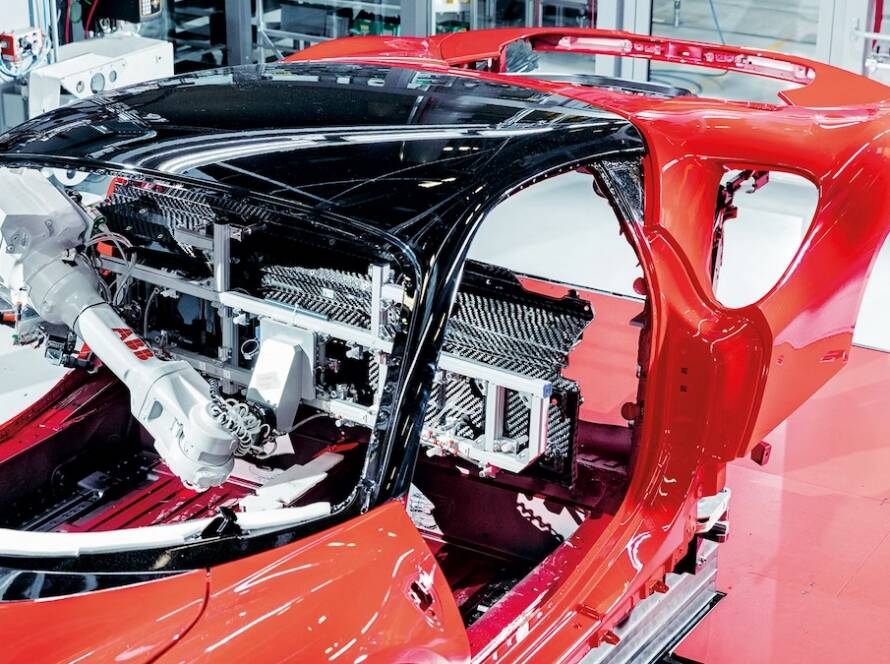
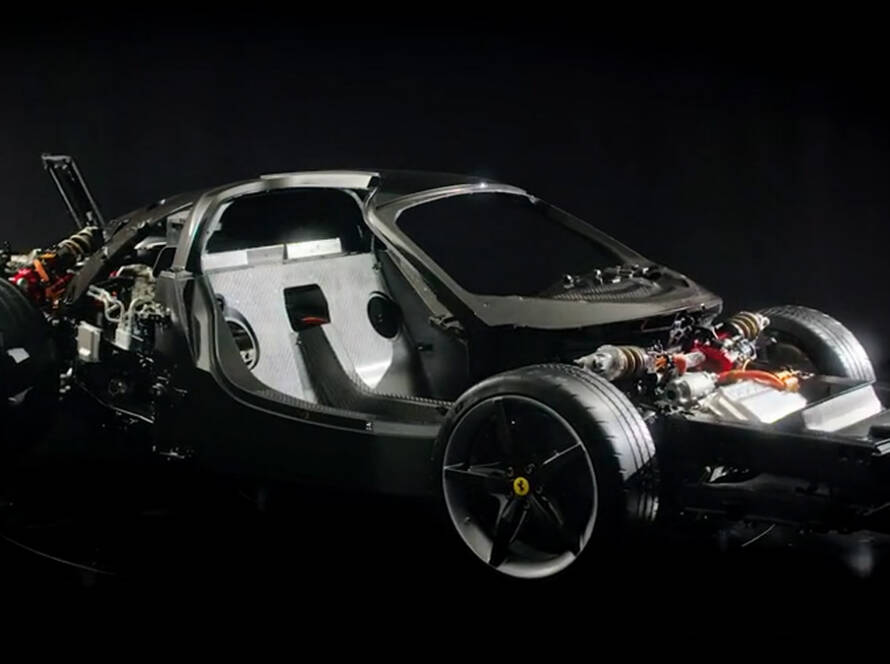
Modern cars mix materials. Aluminum panels, steel fasteners, and carbon or composite parts are bonded and riveted together. Saltwater acts as an electrolyte between those metals and starts corrosion at the joints, which is how flood exposure can turn into structural damage on a car over time.
02
Hidden Damage
Most of It Is Out of Sight
The worst corrosion happens inside the body. A saltwater-exposed car can't be judged from the outside. Cavities have to be opened and flushed, and if there's any doubt, the structure gets measured against factory dimensions during car frame repair.
03
Electronics
The Electronics Fail on a Delay
Salt gets into multi-pin connectors and circuit boards. The car may start and drive, then throw intermittent faults weeks later. Cameras and radar that were underwater can't be trusted until they're tested and go through ADAS calibration.
What Flood Damage Repair Involves
A proper flood repair goes well beyond drying the carpet. Water reaches places you can’t see, and every system it touched has to be checked, cleaned, or replaced:
- Interior: carpet, padding, and seats come out so the floor can be dried and treated for mold, or replaced.
- Fluids: engine oil, transmission, differential, and brake fluid are checked for water and changed.
- Engine and fuel: the intake and cylinders are inspected before the engine is ever turned over, and a contaminated fuel system is drained.
- Electrical: connectors are opened, cleaned, and sealed, and corroded modules are tested and replaced.
- Safety systems: airbag components and driver-assist sensors are tested, then calibrated.
- Brakes and bearings: wheel bearings and brake parts are inspected for water and grit.
- Structure: body cavities are flushed and treated against corrosion, and the car is measured if anything looks off.
Speed matters. Mold can start growing within a day or two, and saltwater corrosion never pauses, so the sooner a flooded car is torn down, the more of it can be saved.

Repairable, or written off?
Insurers compare projected repair cost against value. Flood exposure makes that projection hard, so carriers often move to a total loss rather than carry an open-ended figure. A documented teardown gives you something specific to respond with.
| Condition | Repairable | At Risk |
|---|---|---|
| Fresh water stayed below the floor | ✓ | — |
| Engine never started after exposure | ✓ | — |
| Battery disconnected soon after | ✓ | — |
| Torn down and dried within a few days | ✓ | — |
| Saltwater above the floor | — | ✓ |
| Water reached the dashboard or seats | — | ✓ |
| Submerged for hours or longer | — | ✓ |
| Assessed months later, after symptoms | — | ✓ |
Where the car is repairable, the teardown record also becomes part of its history file — which is where the value conversation starts. Covered separately in diminished value after a collision.

Before And After A Storm
01
Don’t start it or turn the key
Cranking a wet engine can destroy it, and even turning the key powers up wet electronics. Either one can turn a repair into a total loss.
02
Photograph the water line
Capture the mark on the wheels, doors, and interior before it dries or gets washed away. It proves how deep the water reached.
03
Disconnect the battery once it’s safe
When the water is gone, disconnecting the battery stops current from flowing through wet wiring and connectors.
04
Call your insurer right away
Flood damage is usually a comprehensive claim. Report it quickly, and share your photos of the outside, inside, and water line.
05
Have it towed on a flatbed
A flooded car should never be driven. Enclosed transport keeps road spray off a car that’s already wet.
06
Get a teardown within days
Carpets pulled, cavities opened, connectors inspected, modules tested. A quick look isn’t an assessment, and every day of waiting adds damage.
Frequently Asked Questions
Can a flooded car be fixed?
Often, yes. It depends on water type, depth, and how long the car sat. Fresh water limited to carpets and lower trim is frequently recoverable. Saltwater that reached the structure and wiring is a much harder case, and the answer only becomes clear after disassembly.
Does car insurance cover flood damage?
Only if you carry comprehensive coverage. Liability-only policies don’t cover flood damage to your own car, and federal flood insurance doesn’t cover vehicles. Check your auto policy for your comprehensive deductible.
How long after a flood does car damage show up?
Corrosion and electrical faults commonly appear weeks to months later. Waiting for symptoms lets the damage spread while your claim window narrows.
How can you tell if a car has flood damage?
Look for a musty smell, damp or brand-new carpet, silt under the seats or in the spare tire well, fogged headlights, and rust on seat rails or screws under the dash. A vehicle history report may also show a flood title or a flood-related insurance claim.
My insurer declared my flooded car a total loss. Is that final?
Not necessarily. That decision is often based on a projected repair cost made without a teardown. A documented independent assessment gives you specific findings to respond with.
How do I protect my car before a hurricane?
Take date-stamped photos of the car and its mileage, confirm you have comprehensive coverage, and move it to higher ground. An upper level of a parking garage is safer than a ground-floor garage. Insurers typically stop issuing or changing policies once a storm is approaching, so check your coverage early in the season.
From Recovery to Restoration
We provide 24/7 enclosed transport and structural, aluminium, carbon fibre and paint repair to Ferrari’s published procedures. If your car has been exposed to flooding, we can arrange recovery and a documented assessment.
REPAIR INSIGHTS