Home > Blog > Aluminum Repair > Aluminum Body Repair on Luxury & Exotic Cars
Share this post:
Quick Takeaways
- Aluminum isn’t steel. It can’t be heated, hammered, or pulled back into shape the same way.
- Many panels can be saved. Dents in outer panels are often repairable with aluminum-specific tools.
- Cracked castings get replaced. Structural cast parts are never straightened or welded back together.
- Most joints are cold. Adhesives and rivets do the work that welds do on steel.
Table of Contents
Aluminum body repair is the process of fixing aluminum panels and structure without the heat, force, and welding used on steel. It relies on cold-working, structural adhesives, and rivets so the metal keeps the strength it had from the factory.
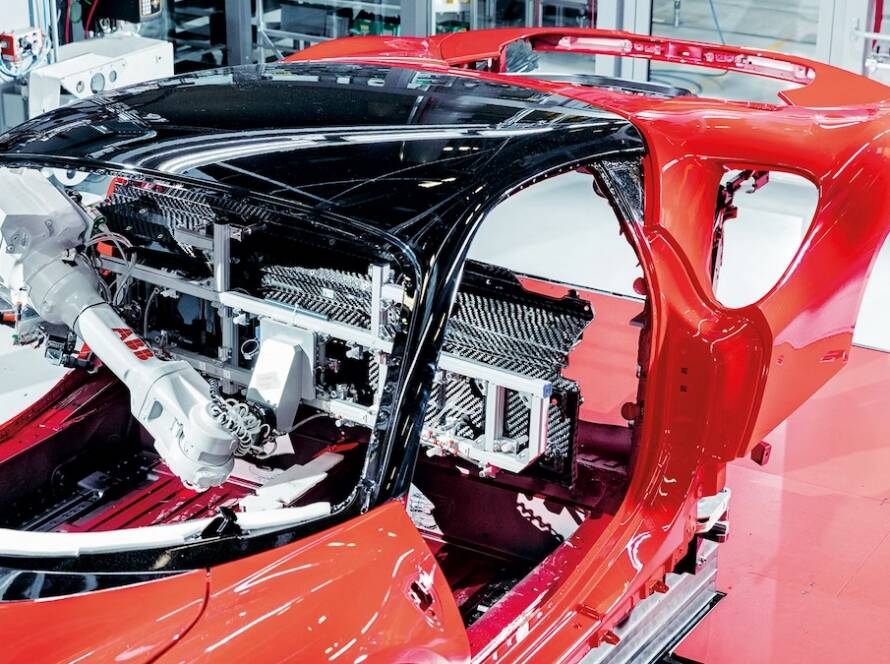
More luxury and exotic cars are built this way. Ferrari, Audi, Rolls-Royce, Jaguar, and Land Rover all use aluminum-intensive bodies to cut weight and add stiffness, which makes the right repair method a core part of luxury car collision repair.
Aluminum vs. Steel: Why the Repair Is Different
Steel is forgiving. It can be heated, pulled, and reshaped, and it tends to spring back toward its original form.
Aluminum isn’t. It has far less of that “memory.” Once it’s stretched or kinked, it work-hardens and can develop internal cracks that weaken crash performance. Heat makes it worse, because aluminum gets much of its strength from heat treatment at the factory, and a torch undoes that permanently.
So aluminum repairs follow different rules: cold-working instead of heat, bonding and rivets instead of most welding, and replacement instead of straightening when the damage goes too far.
What an Aluminum Car Body Is Made Of
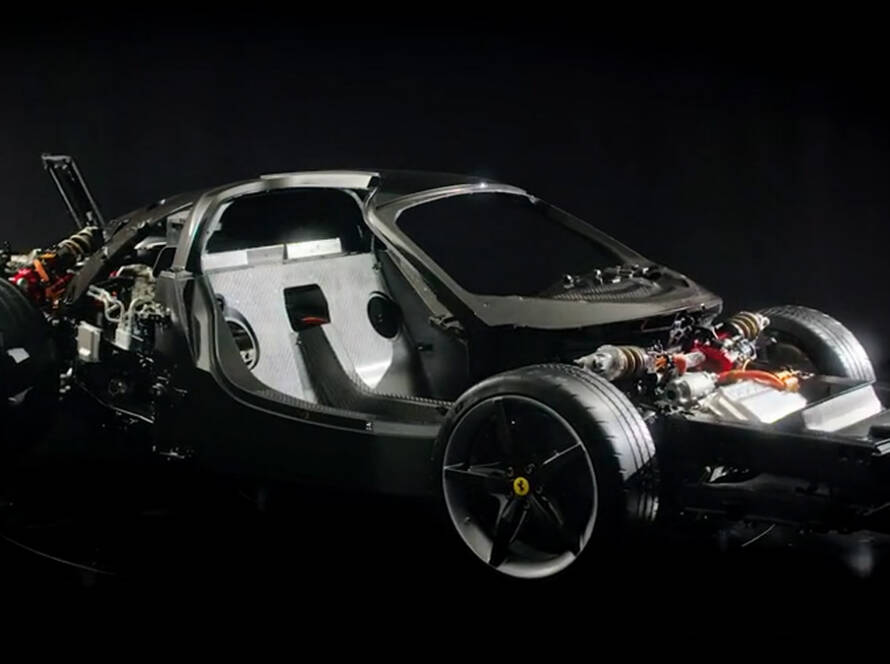
An aluminum body isn’t one piece of metal. It’s several kinds of aluminum parts bonded, riveted, and sometimes welded into one structure. Some exotics also mix in carbon fiber, which needs its own repair procedures.
| Part | What It Does |
|---|---|
| Extrusions | ●Rails and crash-management beams |
| Castings | ●Suspension nodes and high-load mounting points |
| Stamped Reinforcements | ●Floor and interior support structure |
| Outer Panels | ●Hood, doors, fenders, and roof skins |
Each part reacts differently in a collision, and each has its own repair limits.
Can Aluminum Body Panels Be Repaired?
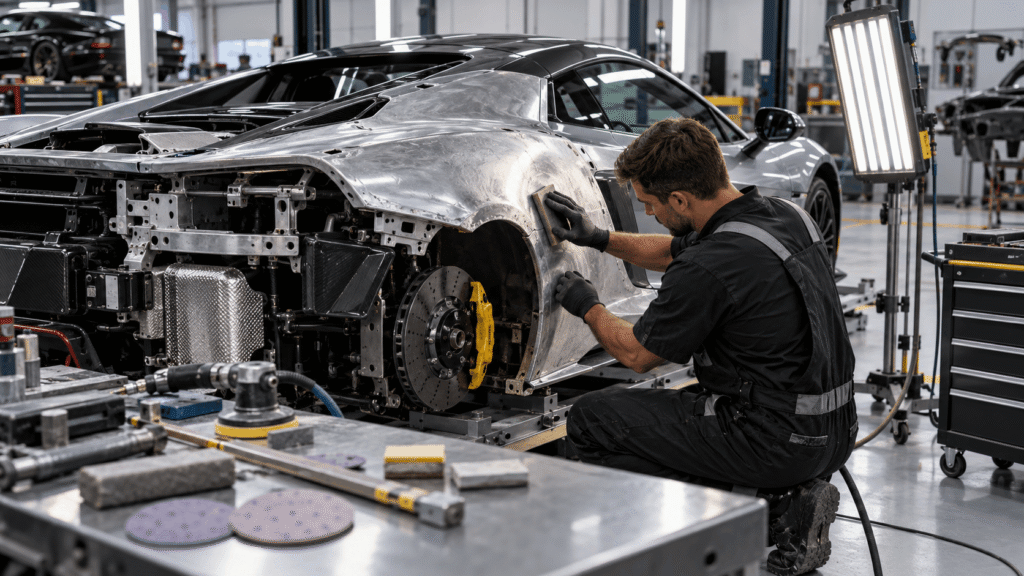
Often, yes. Dents and creases in outer panels can usually be worked out with aluminum-specific tools and, where the manufacturer allows it, carefully controlled heat held under a set temperature limit.
A panel gets replaced when:
- The metal is cracked, torn, or stretched thin
- The damage sits on a sharp body line or edge
- The manufacturer’s procedure calls for replacement
Bonded and riveted panels are replaced at factory joints, not cut and welded wherever the damage stops.
Why Hidden Damage Is Common on Aluminum Cars
Aluminum spreads collision energy quickly across the whole structure, so the visible damage is often only part of what happened. Disassembly can uncover:
- Cracked mounting nodes
- Distorted reinforcement rails
- Separated bond seams
- Hidden stress fractures
That’s why the structure is measured before any repair starts. If the damage reaches the frame, the next step is the frame damage repair process.
Fixture systems allow technicians to return the chassis to original factory reference points down to fractions of a millimeter.
Why Contamination Matters
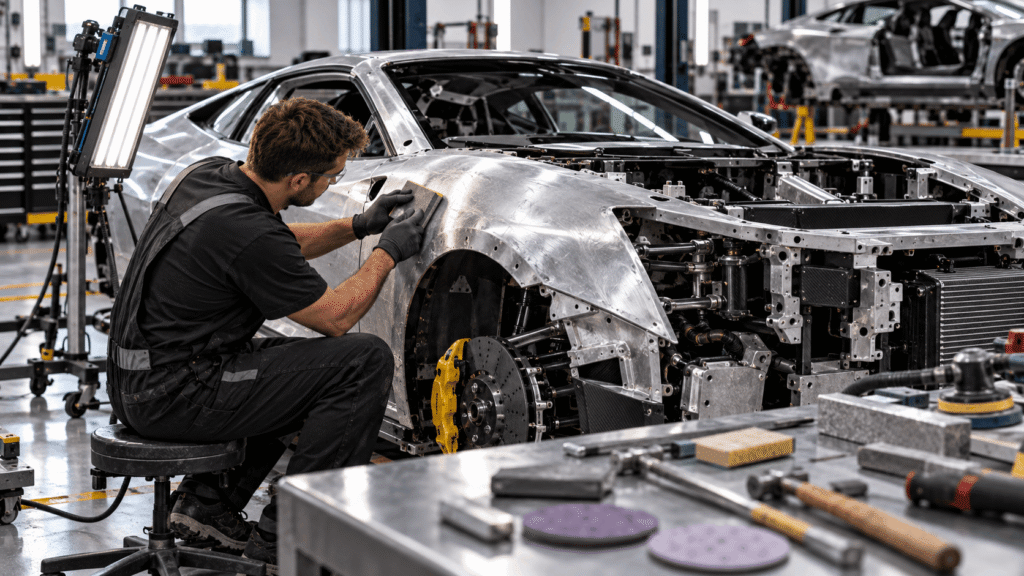
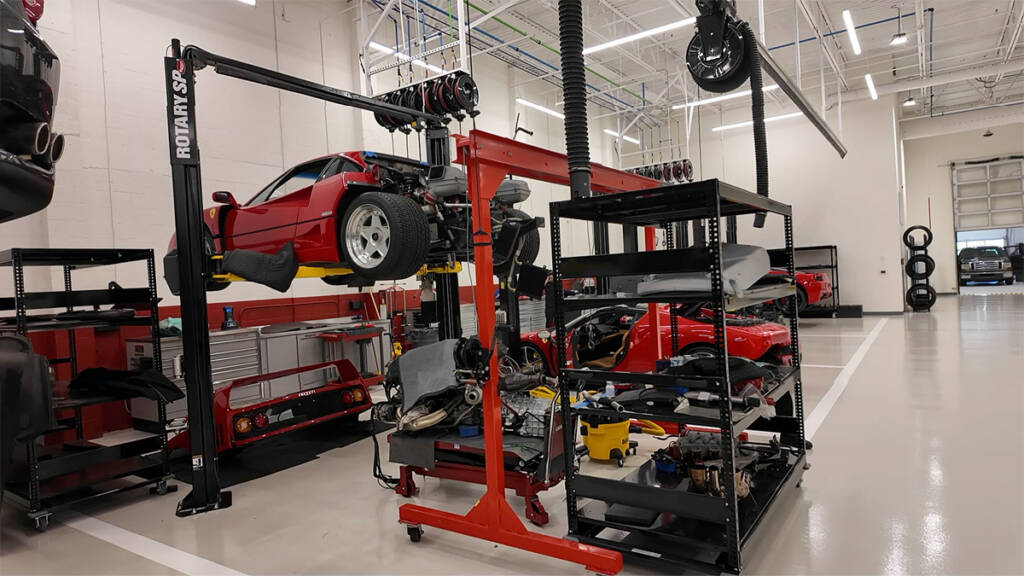
Steel dust is aluminum’s hidden enemy. When particles from steel grinding land on bare aluminum, they can start galvanic corrosion under the paint that doesn’t show up until the damage is done. That’s why aluminum repair needs its own tools and workspace, which we cover in what an aluminum repair facility requires.
How Aluminum Is Joined: Bonding, Rivets & Welding
Most aluminum bodies are held together with cold-joining methods, not traditional welding, and repairs follow the same approach.
01
Cold joining
Structural Adhesive Bonding
Spreads loads evenly across the whole joint instead of concentrating them at weld points. Adhesives are used exactly as the manufacturer specifies, including cure times and temperatures.
02
Cold joining
Self-Piercing Rivets
Hydraulically pressed through the layers of metal without a pre-drilled hole, locking panels together with no heat. Often paired with adhesive for extra strength.
03
Heat joining
Controlled Aluminum Welding
Used only where the manufacturer approves it, with dedicated aluminum welding equipment and strict heat control to protect the surrounding metal.
Why Heat Management Matters
Aluminum gets much of its strength from heat treatment at the factory. Uncontrolled heat during a repair permanently changes that.
| What Goes Wrong | Result |
|---|---|
| Torch heating to straighten | ●Weakened alloy and lower strength |
| Heat above the manufacturer's limit | ●Brittleness and micro-cracks |
| Welding outside approved locations | ●Compromised crash performance |
That’s why heat is controlled at every stage of an aluminum repair, not just during welding.
FAQs About Aluminum Body Repair
Is aluminum body repair more expensive than steel?
Usually. It takes dedicated tools, specialized training, and more parts replacement, since aluminum can’t be straightened as freely as steel.
Is aluminum stronger than steel?
Not piece for piece. Aluminum is much lighter, so manufacturers use thicker sections to get the same strength and stiffness at less weight. That’s the trade-off that makes it popular on luxury and exotic cars.
Why can’t aluminum be heated like steel?
Aluminum gets much of its strength from heat treatment at the factory. Uncontrolled heat weakens the alloy permanently and can make it brittle.
What are self-piercing rivets?
Rivets pressed through layers of metal without a pre-drilled hole, joining aluminum parts with no heat. They’re often used together with structural adhesive.
Is a Ferrari body made of aluminum?
Most current Ferrari models are built on aluminum space-frames, and some use carbon fiber in key areas. Repairs follow Ferrari’s factory procedures for each material.
Aluminum Repair
Aluminum Body Repair in Pompano Beach
Aluminum needs the right tools and procedures. We repair aluminum panels and structure on luxury and exotic cars as part of our collision repair work, following each manufacturer's factory procedures.
REPAIR INSIGHTS