Home > Blog > Aluminum Repair > Why Ferrari Aluminum Repair Requires Specialized Facilities
Share this post:
Quick Takeaways
- Ferrari aluminum requires isolated non-ferrous environments.
- Airborne steel contamination can damage advanced aluminum structures.
- Factory jig calibration restores exact geometry and alignment.
- Certified repairs help preserve long-term vehicle value and OEM standards.
Table of Contents
Why does Ferrari aluminum repair require specialized facilities?
Ferrari aluminum can be compromised by contamination, uncontrolled heat, or inaccurate calibration — problems that conventional body shops aren’t equipped to prevent.
Factory-authorized facilities use isolated workspaces, aluminum-only tooling, and manufacturer-guided procedures built specifically for Ferrari space-frame architecture.
Why Ferrari Uses Advanced Aluminum Architecture
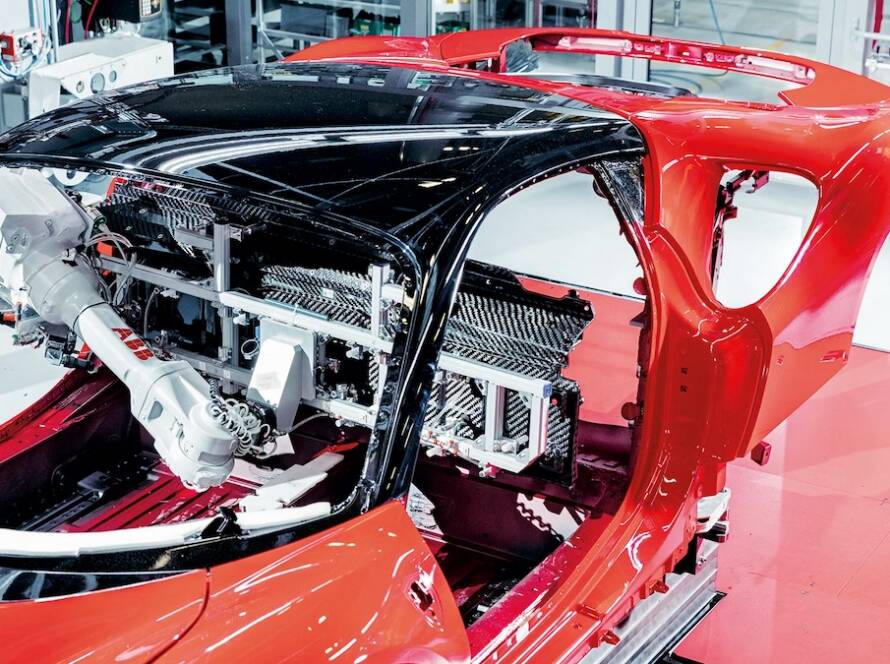
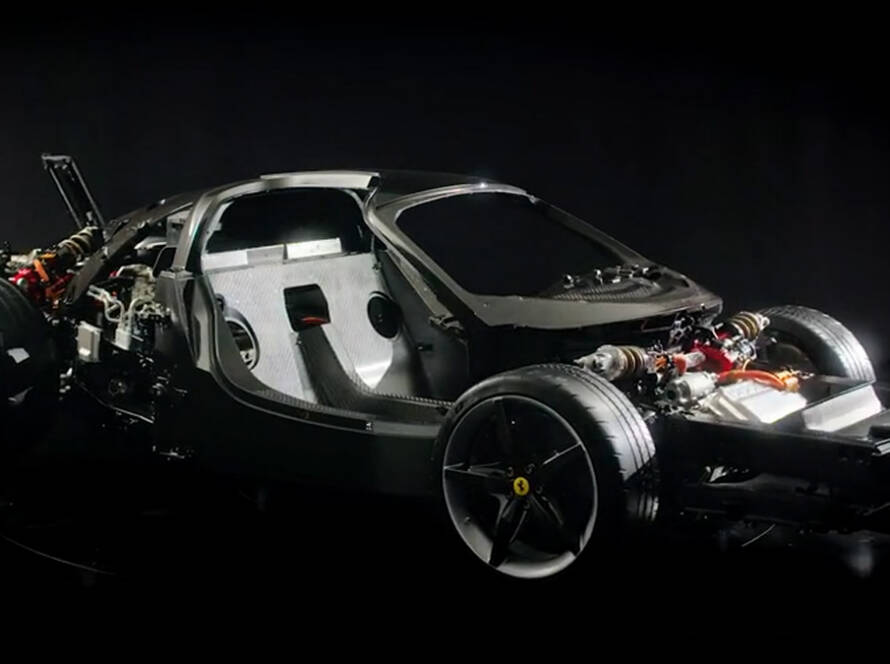
Modern Ferrari vehicles rely on lightweight aluminum structures designed to maximize strength while reducing overall mass.
This engineering philosophy improves:
- Acceleration
- Chassis Response
- Cornering Stability
- High-Speed Balance
Unlike steel, Ferrari aluminum alloys leave very little margin for error once the material has been compromised. Restoration has to be done right the first time.
Why Standard Body Shops Cannot Repair Ferrari Aluminum Properly
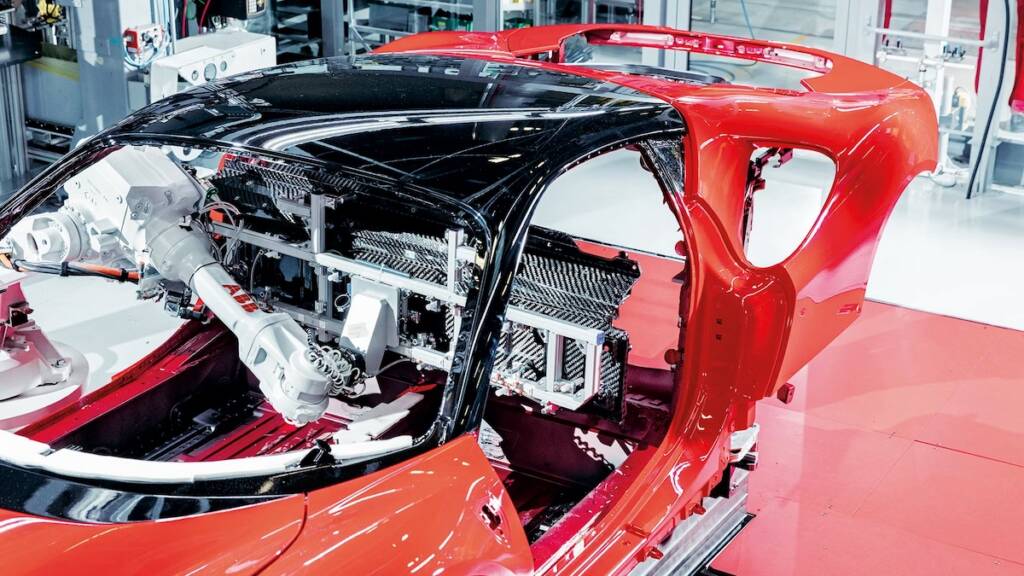
Conventional shops are built around steel vehicles. Ferrari aluminum behaves entirely differently under stress, heat, and load distribution.
Ferrari’s platform uses three distinct structural types:
- Aluminum Castings: Suspension nodes and impact zones requiring full factory replacement if damaged.
- Structural Extrusions: Multi-hollow aluminum beams forming the vehicle’s rigid foundation.
- Outer Sheet Structures: Lightweight exterior panels engineered for aerodynamic performance.
Improper repairs to any of these can compromise vehicle stability, suspension geometry, crash performance, and long-term structural integrity.
Standard Facility vs Ferrari Aluminum Facility
| Standard facility | Ferrari COACHWORKS |
|---|---|
| Shared workspaces | ●Isolated non-ferrous environments |
| Standard steel tooling | ●Aluminum-only tooling |
| Generic frame systems | ●Factory jig calibration systems |
| Conventional welding | ●Controlled non-ferrous procedures |
| Universal workflows | ●Ferrari-specific standards |
Cross-Contamination & Galvanic Corrosion
This is one of the least visible risks in Ferrari aluminum repair.
When airborne steel particles contact exposed aluminum, galvanic corrosion begins forming beneath the surface. It develops quietly — long after the visible repair looks complete. Even contaminated sanding tools or grinding dust from nearby steel work can trigger it.
In a conventional shop, that risk is difficult to control. In an isolated non-ferrous environment, it’s designed out entirely.
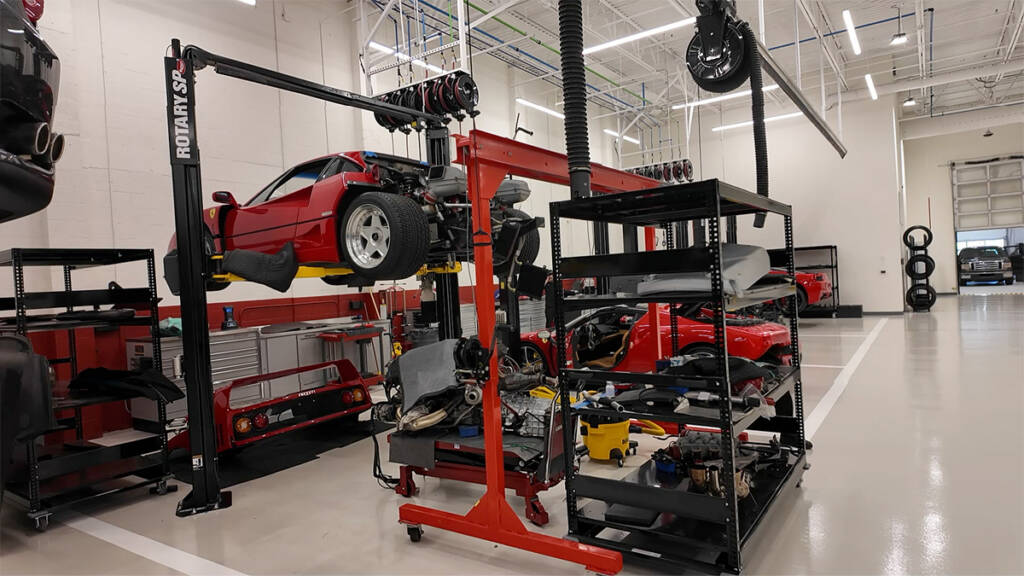
Why Ferraris Require Isolated Clean Room Environments
Ferrari aluminum work must take place inside physically isolated environments built for non-ferrous materials.
These environments use:
- Dedicated Aluminum-Only Tools
- Controlled Air Filtration Systems
- Isolated Sanding Areas
- Strict Contamination-Control Procedures
For most owners, this is one of the clearest differences between a conventional collision shop and a true Ferrari restoration facility.
Aluminum Joining Procedures
Three joining methods are used in Ferrari aluminum restoration — each serving a specific structural purpose.
Controlled Thermal Welding
Non-ferrous welding procedures require tightly controlled heat management to avoid weakening heat-treated aluminum structures.
Adhesive Bonding
Advanced bonding systems distribute load forces evenly throughout the vehicle structure while reducing localized stress concentration.
Self-Piercing Riveting (SPR)
Specialized hydraulic riveting systems secure aluminum components without drilling holes that can weaken factory load paths.
Where aluminum meets carbon fiber components, specialized bonding systems also isolate the two materials to prevent galvanic reactions.
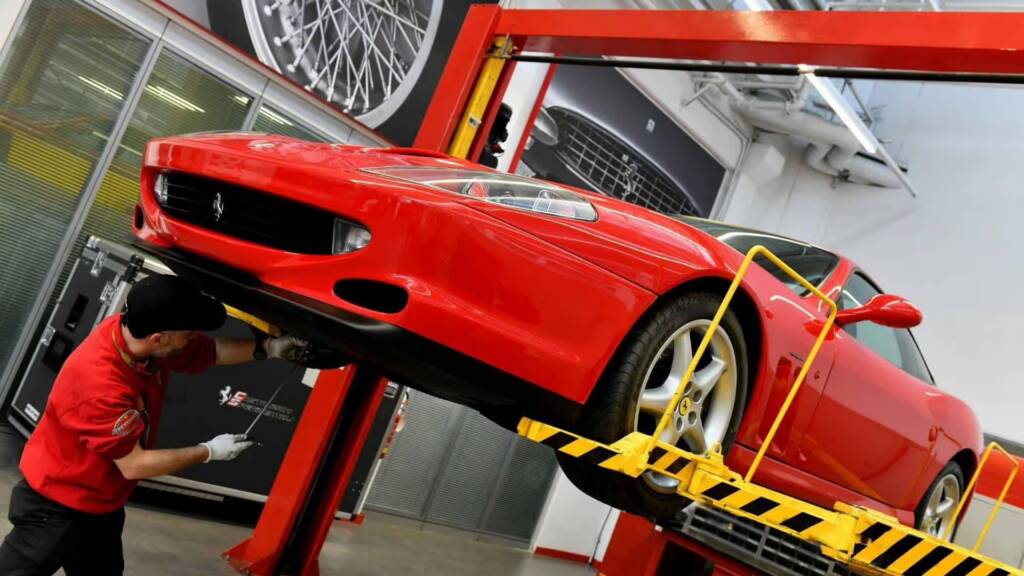
Factory Jig Calibration & Chassis Alignment
Restoring a Ferrari chassis means restoring exact geometry — not approximate geometry.
Factory-authorized facilities use Car Bench or Celette fixture systems to achieve this through a four-step process:
- Platform Anchoring: Technicians anchor the vehicle structure directly to factory reference points.
- Variance Measurement: Equipment measures dimensional variances precisely against factory blueprints.
- Deviation Correction: Technicians correct deviations to eliminate geometric variances.
- Tolerance Verification: The system verifies final alignment tolerances down to fractions of a millimeter.
At Ferrari performance levels, small dimensional inconsistencies have real consequences at speed.
Why Structural Accuracy Matters at High Speed
Ferrari vehicles are engineered around exact aerodynamic and suspension calculations.
Inconsistencies can influence high-speed vehicle behavior, including:
- Steering Response
- Cornering Stability
- Suspension Behavior
- High-Speed Stability
Restoring factory tolerances isn’t a detail — it’s the whole point.
How Certified Ferrari Repairs Help Protect Long-Term Value
For many owners, a Ferrari represents more than transportation — it’s a collectible with a history that matters.
Certified facilities help preserve:
- OEM Compliance
- Documentation
- Service History Continuity
- Long-Term Ownership Confidence
Documented, manufacturer-guided repairs support stronger resale confidence in the collector market. Undocumented or non-certified work leaves gaps that sophisticated buyers notice.
FAQs About Ferrari Aluminum Restoration
Why does Ferrari use aluminum instead of steel?
Ferrari utilizes advanced aluminum architecture to reduce weight while maintaining exceptional chassis control and high-speed stability.
Why can’t standard body shops work on Ferrari aluminum?
Conventional facilities often lack isolated cleanrooms, dedicated aluminum tooling, and Ferrari-specific calibration equipment.
What is galvanic corrosion?
Galvanic corrosion occurs when steel contamination contacts exposed aluminum and gradually weakens the material over time.
Why are isolated cleanrooms important during aluminum work?
Isolated environments help prevent airborne steel contamination during non-ferrous reconstruction procedures.
Does Ferrari aluminum require specialized welding methods?
Yes. Ferrari aluminum systems rely on controlled non-ferrous welding, advanced bonding techniques, and factory-approved riveting technologies.
What is a Ferrari jig calibration system?
A jig calibration system anchors the chassis to factory reference points so technicians can restore exact dimensional alignment.
Can improper aluminum work affect resale value?
Yes. Undocumented or non-certified reconstruction can negatively impact long-term resale confidence and ownership history.
Do certified Ferrari facilities help preserve factory standards?
Factory-authorized facilities help maintain OEM specifications, dimensional documentation, and manufacturer-guided reconstruction standards.
Protecting Long-Term Stability
Ferrari aluminum restoration depends on environmental control, specialized procedures, and exact calibration — from contamination prevention through final alignment verification.
Every stage influences how the vehicle performs, ages, and holds its value.
Learn more about our Ferrari aluminum repair procedures and factory-authorized standards.
REPAIR INSIGHTS