Home > Blog > Aluminum Repair > How Ferrari Aluminum Space-Frames Are Restored
Share this post:
Quick Takeaways
- Cold-Joining Procedures: Help preserve original Ferrari aluminum strength.
- Casting Protection: Structural castings cannot be heated or reshaped.
- Fixture Calibration: Bench jig systems restore millimeter-exact geometry.
- Digital Verification: Calibration reports validate factory alignment standards.
Table of Contents
Why Ferrari Space-Frame Restoration Is Different
Ferrari aluminum space-frames can’t be restored the way conventional vehicles are. The alloys don’t tolerate uncontrolled heat or traditional frame pulling.
Proper restoration relies on:
- Car Bench or Celette calibration platforms
- Aerospace-grade bonding adhesives
- Self-piercing riveting systems
These aren’t upgrades — they’re requirements for returning the frame to its original dimensional behavior and load characteristics.
Understanding Ferrari Aluminum Space-Frame Construction
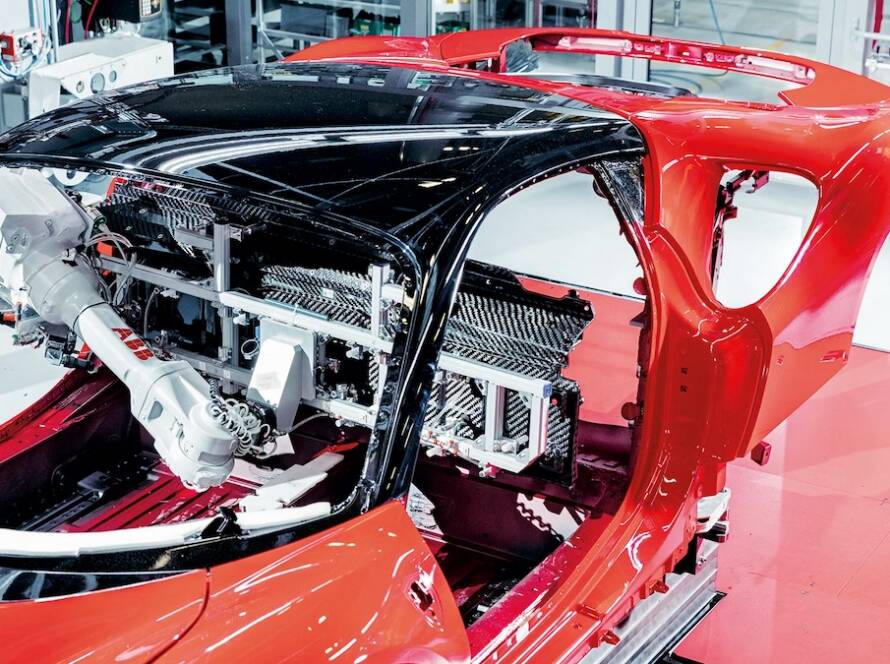
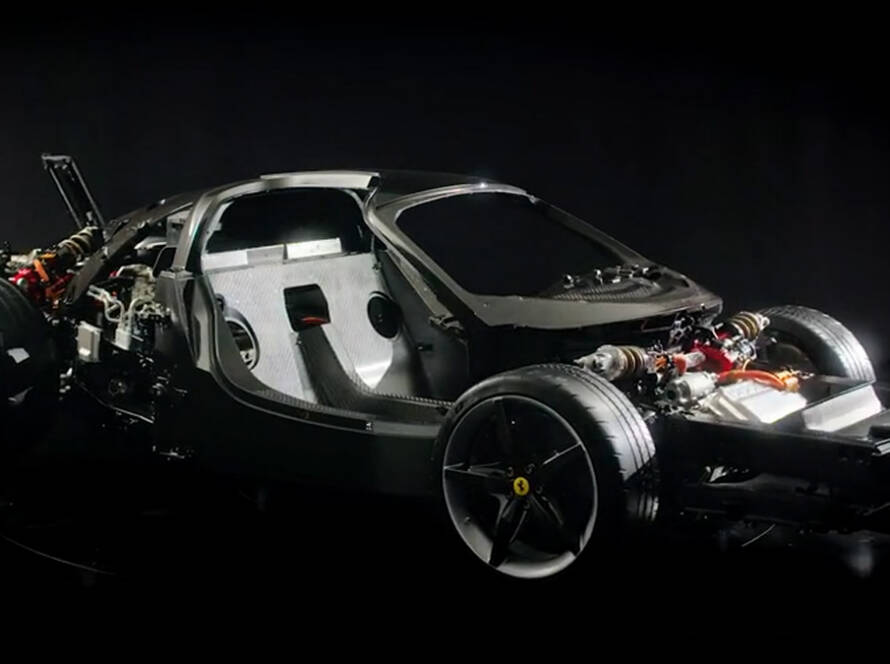
A Ferrari space-frame isn’t a single structure — it’s multiple aluminum components engineered to work as one unified safety cell.
Many modern Ferrari platforms also integrate composite structures requiring completely different procedures.
| Component | Role |
|---|---|
| Extrusions | ●Longitudinal rails and energy-management beams |
| Castings | ●Suspension nodes and high-load mounting points |
| Stamped Reinforcements | ●Floor structures and interior support sections |
Each area reacts differently during a collision — and each requires a different restoration approach.
Why Ferrari Aluminum Cannot Be Repaired Like Steel
Steel can often be reshaped repeatedly with manageable consequences. Ferrari aluminum can’t.
Once stretched or deformed, the alloy can develop microscopic internal damage that permanently weakens crash performance. There’s no correcting it with heat or force.
Ferrari castings cannot be heated, hammered, or pulled back into shape. Factory procedures require complete replacement at designated sectioning points.
How Disassembly Reveals Hidden Damage
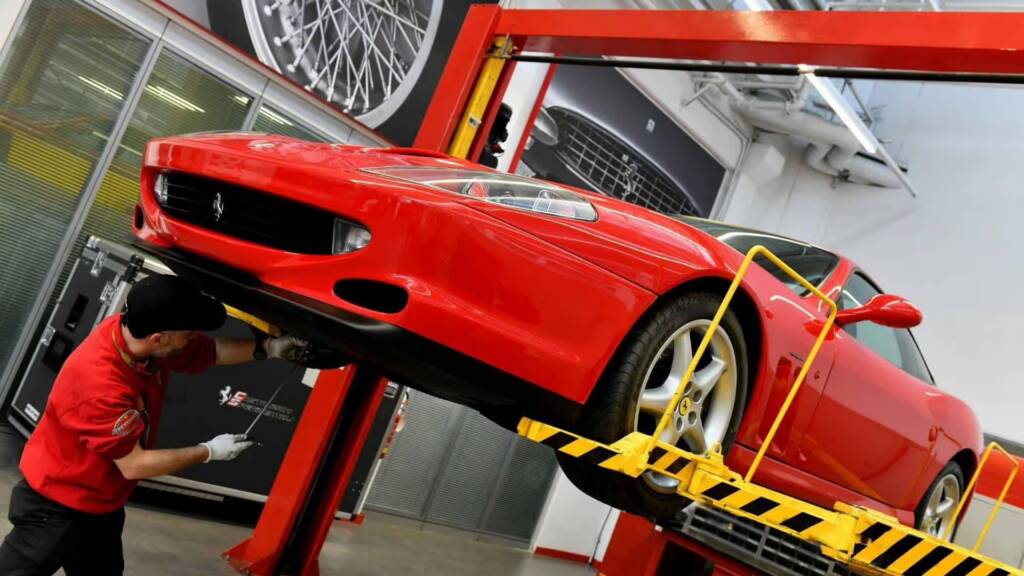
Aluminum distributes collision energy rapidly across the entire platform. Visible exterior damage often represents only a fraction of what actually happened structurally.
Hidden damage may include:
- Fractured mounting nodes
- Distorted reinforcement rails
- Separated bond seams
- Hidden stress fractures
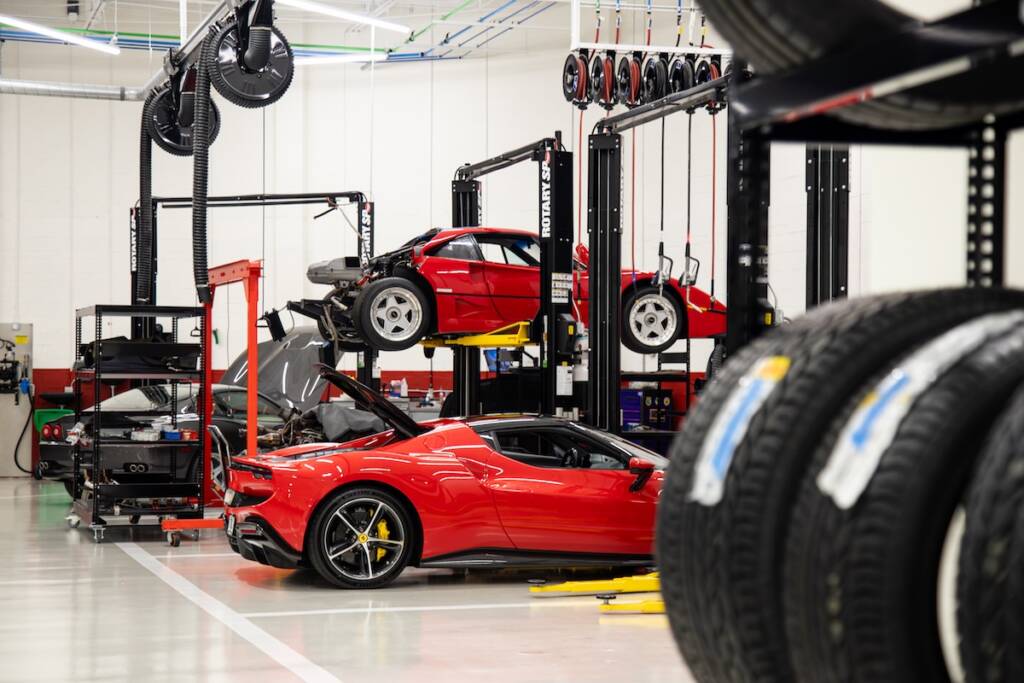
Full disassembly is required before dimensional reconstruction can begin — there’s no accurate way to assess the structure otherwise.
Why Ferrari Repairs Require Isolated Aluminum Environments
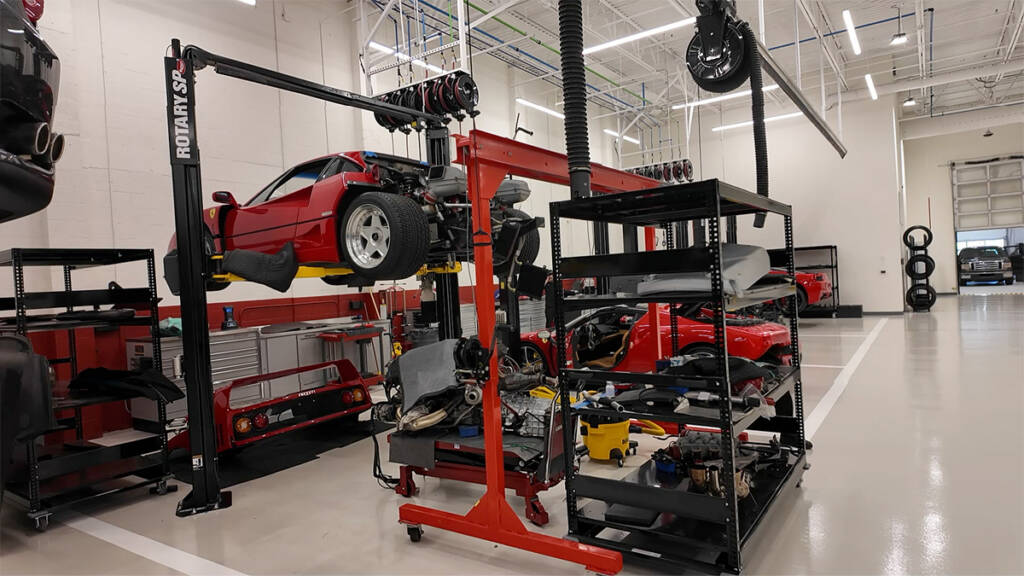
Ferrari aluminum restoration must occur inside isolated non-ferrous repair environments.
Microscopic steel contamination is one of the least visible risks in aluminum repair — and one of the most consequential.
Proper facilities require:
- Aluminum-only tooling
- Independent air filtration
- Isolated sanding areas
- Strict contamination-control procedures
When airborne steel particles contact exposed aluminum, galvanic corrosion begins developing beneath the surface. It’s undetectable until the damage is done.
How Bench Jig Systems Restore Ferrari Geometry
Restoring a Ferrari space-frame means restoring exact geometry — not approximate geometry.
The calibration process follows a precise sequence:
01
Vehicle disassembly and platform exposure
02
Fixture-table mounting and anchoring
03
Vehicle-specific jig installation
04
Structural coordinate mapping
05
Dimensional correction
06
Final geometry verification
Fixture systems allow technicians to return the chassis to original factory reference points down to fractions of a millimeter.
Bonding, Welding & Self-Piercing Riveting
Modern Ferrari space-frames rely on cold-joining technologies — not thermal welding — wherever possible.
Adhesive Bonding
Aerospace-grade materials engineered for uniform load distribution. Factory adhesives are date-coded and temperature-controlled to maintain structural consistency.
Self-Piercing Riveting (SPR)
Hydraulic joining systems that secure aluminum components without drilling holes that would weaken factory load paths.
Controlled Non-Ferrous Welding
Thermal joining used only in factory-approved locations, with strict heat management throughout.
Why Heat Management Matters During Aluminum Repairs
Ferrari aluminum gets its strength through specialized thermal treatment during manufacturing. Applying uncontrolled heat after the fact permanently alters that.
| Heat Variable | Consequence |
|---|---|
| Uncontrolled torch heating | ●Weakened metallurgy, lowered tensile yield |
| Improper thermal correction | ●Structural brittleness, micro-fractures |
| Overheated joining zones | ●Compromised crash behavior |
This is why Ferrari restoration maintains strict thermal standards at every stage of chassis correction — not just welding.
How Ferrari Structural Integrity Is Verified
Installation isn’t the final step. Digital dimensional verification against original Ferrari factory coordinates is.
Verification may include:
- Car Bench calibration reports
- Celette dimensional mapping
- Suspension geometry verification
- ADAS recalibration
- Digital coordinate printouts
These reports confirm the chassis has returned to factory alignment tolerances — and provide documentation that follows the car.
FAQs About Ferrari Aluminum Space-Frame Restoration
Can Ferrari aluminum be straightened after a collision?
Certain components may be recalibrated, but damaged structural castings often require replacement.
Why can’t Ferrari aluminum be heated like steel?
Excessive heat weakens the alloy grain structure and compromises crash performance.
What are self-piercing rivets?
SPR systems join aluminum structures without traditional drilling or excessive thermal welding.
Why are isolated cleanrooms important?
Isolated environments help prevent steel contamination and galvanic corrosion.
What verifies Ferrari chassis alignment after repairs?
Digital calibration reports validate dimensions against factory specifications.
Maintaining Factory Standards
A Ferrari space-frame is engineered around exact dimensional tolerances, specific material behavior, and precise calibration standards.
Proper restoration preserves all three — and with it, the handling balance, aerodynamic stability, and driving character that were engineered into the car from the start.
Explore our Ferrari aluminum restoration procedures and factory-guided repair standards.
REPAIR INSIGHTS