Home > Blog > Aluminum Repair > Can a Ferrari Be Repaired After Frame Damage?
Share this post:
Quick Takeaways
- Your Ferrari isn’t automatically totaled. “Frame damage” sounds catastrophic, but most structural components on a modern Ferrari can be safely repaired or replaced.
- It’s not steel — it’s aluminum architecture. Ferraris are built on advanced aluminum space-frames, not the traditional steel frames most repair shops are used to.
- Precision is everything. Restoring a Ferrari’s structure means factory blueprint data, specialized bonding techniques, and dedicated fixture systems — not guesswork.
Table of Contents
The Short Answer
Yes. A Ferrari can be repaired after structural or “frame” damage, as long as the work is done using factory-approved procedures and specialized aluminum restoration techniques.
Whether a component is repaired or replaced depends on where the damage is and how severe it is — not on the mere fact that structural damage occurred.
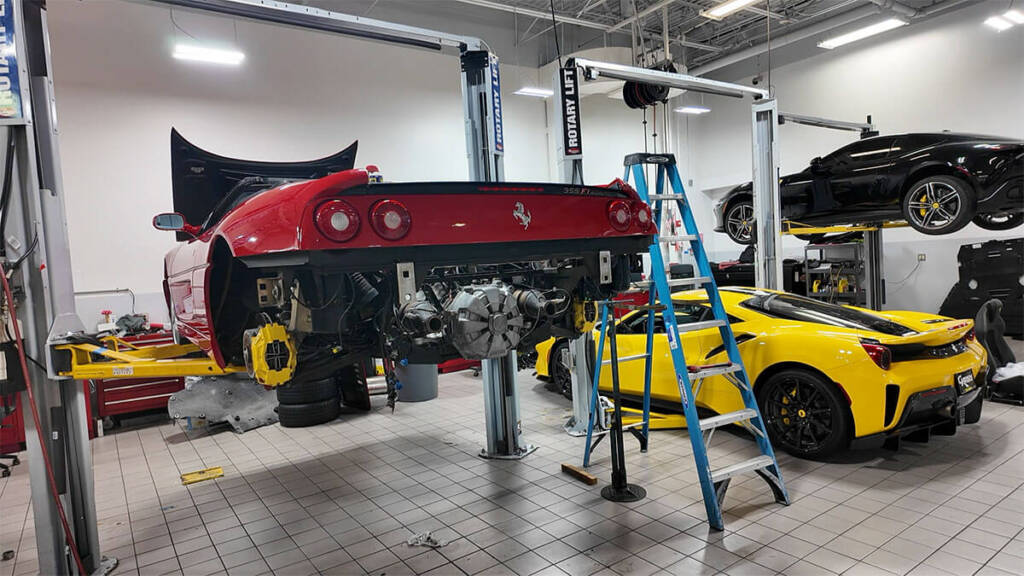
First, Take a Breath: Damage Isn't Always the End
If you just heard the words “frame damage” from a shop or an adjuster, your stomach probably dropped — that reaction makes sense, since for most cars it means expensive and permanent. But with a Ferrari, that assumption often doesn’t hold up.
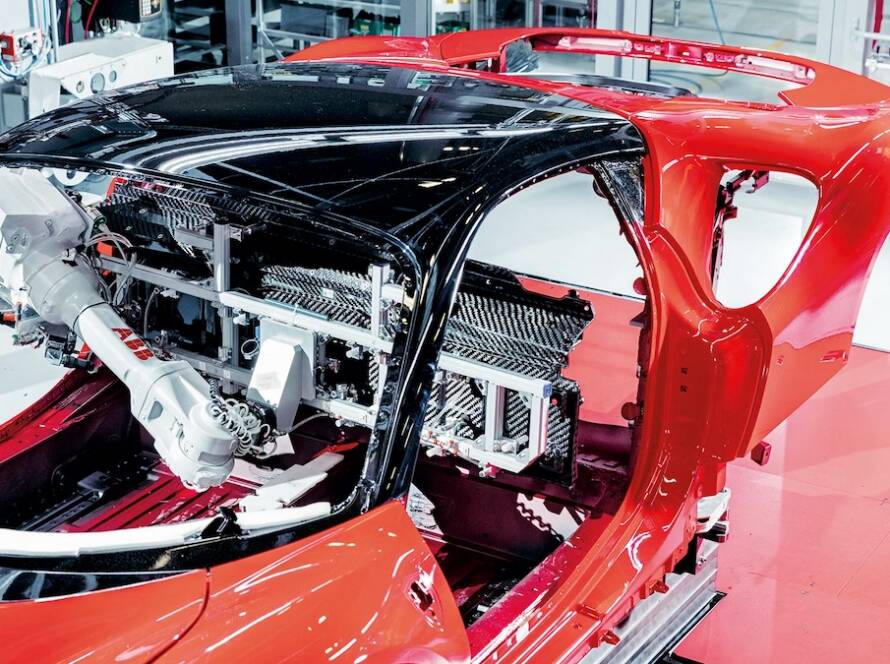
That’s because a Ferrari’s structure isn’t one solid piece of metal that either survives an impact or doesn’t. It’s a network of distinct components:
- Aluminum extrusions — hollow, shaped tubes that form the core structural pillars
- Cast nodes — die-cast intersection points where multiple structural beams meet
- Crash structures — sections designed to deform and absorb impact energy on purpose
- Suspension mounting points — where the chassis connects to the control arms and subframes
Which means structural damage is a specific, solvable problem — not a verdict on the car.
Why Ferrari Doesn't Build Like Other Cars
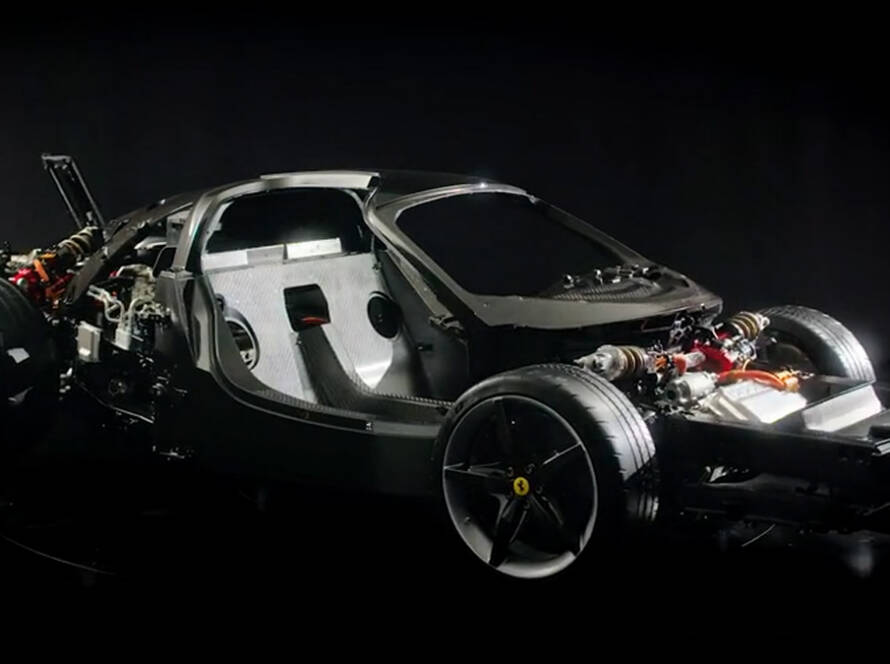
Most passenger cars use a steel unibody or ladder frame. Ferrari builds differently — a lightweight, ultra-rigid aluminum space-frame. Current models like the 12Cilindri, 296 GTB, Amalfi, Purosangue, and 849 Testarossa combine aluminum alloys, carbon fiber, and structural adhesives to get there.
- Material — Traditional: steel body-on-frame or unibody. Ferrari: multi-alloy aluminum.
- Repair method — Traditional: heat, pull, weld. Ferrari: structural bonding, riveting, cold-joining.
- Measurement — Traditional: standard computerized systems. Ferrari: precision bench jig fixtures.
Aluminum and steel behave completely differently under stress — heating aluminum and pulling it back into shape ruins the metal. It needs a cold, precise approach instead, which is why Ferrari structural repair looks nothing like a standard collision job.
When Can Damage Actually Be Repaired?
Whether repair is possible depends on the location of the damage, the condition of the aluminum, and Ferrari’s factory repair procedures—not simply the fact that structural damage occurred.
More often than owners expect:
- Front and rear crash structures — designed to absorb impact and protect the cabin. Replacing them is exactly what’s supposed to happen.
- Minor extrusion damage — a slight bend or twist without cracking can often be safely reshaped with factory cold-working procedures.
- Bolt-on subframes — if damage is contained there, the subframe can simply be replaced without touching the main cabin structure.
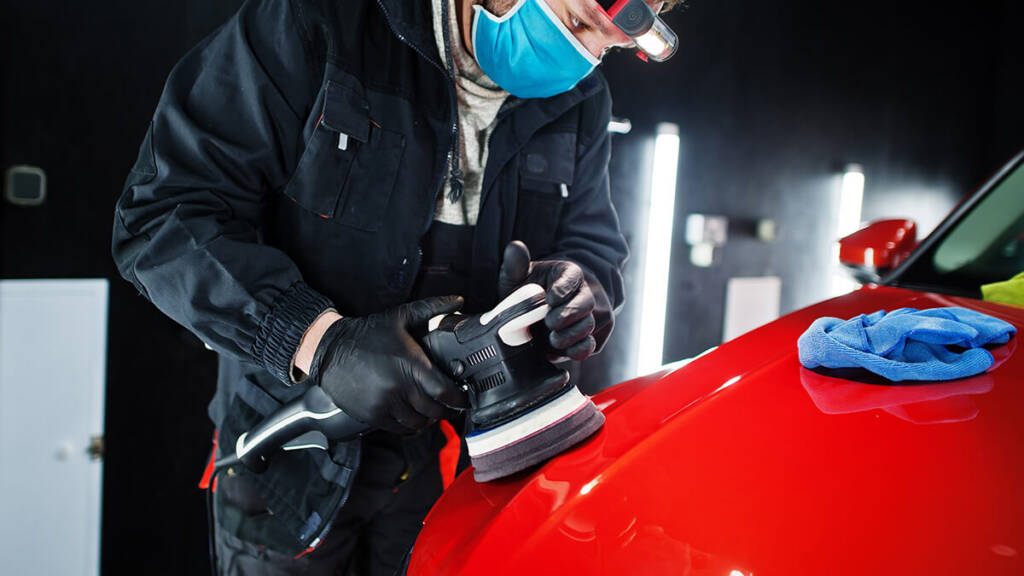
When Does a Part Need to Be Replaced Instead?
Replacement becomes mandatory when:
- A cast aluminum node is cracked — Brittle by nature, it can never be welded back together.
- The metal has fatigued — A buckled or sharply bent extrusion is weakened at a molecular level; bending it back just hides the problem.
- Ferrari’s own repair manual says so — Every model has a factory manual dictating replacement thresholds, and certified shops follow it without exception.
How Do You Know the Chassis Is Actually Straight Again?
You can’t eyeball it — and neither can most shops. The standard is a factory-authorized bench jig system:
01
Blueprint measurement
Laser diagnostics compare the vehicle against Ferrari’s factory digital blueprints to identify even the smallest structural deviations.
02
Jig fixture alignment
Model-specific steel bench fixtures precisely locate where structural movement has occurred before any repairs begin.
03
Correction and verification
Structural sections are corrected and remeasured until every reference point matches the factory geometry established when the vehicle left Maranello.
The Damage You Can't See Yet
What you see on the outside is rarely the whole story. Impact energy travels through the car along the path of least resistance, so a front-end collision can quietly cause issues much further back — affecting suspension geometry and, as we cover in our Ferrari ADAS Calibration Guide, the accuracy of safety sensors that depend on a perfectly squared chassis.
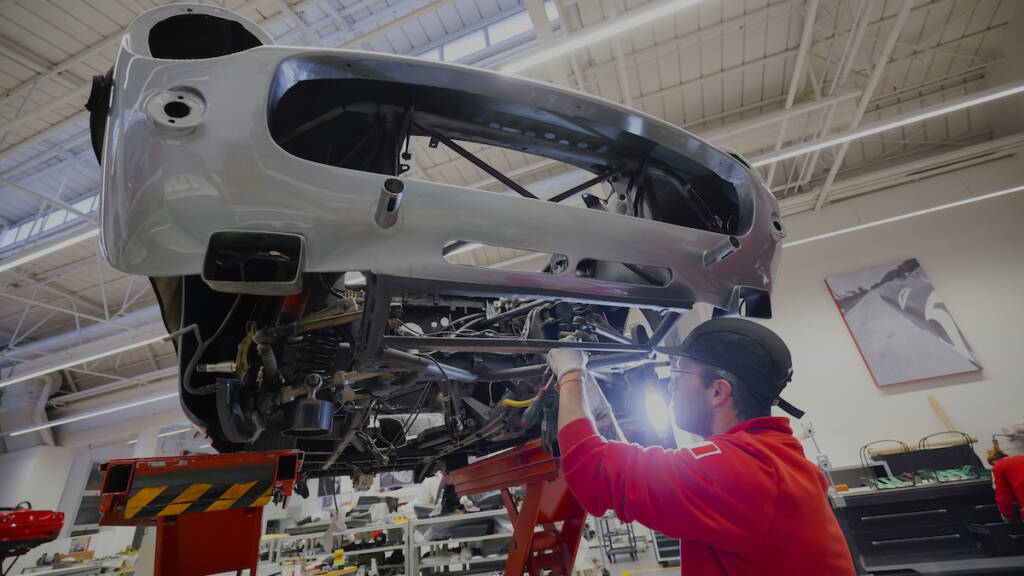
Will This Hurt My Ferrari's Value?
This is the question underneath all the others: even if it’s fixed perfectly, is my car ruined financially?
Honestly — a structural repair will always be part of the car’s history. But there’s a real difference between a repair done at a generic shop and one done by a specialist working from factory protocols. What protects your investment:
- Complete documentation — blueprint measurements, bench jig certifications, and genuine parts invoices
- Structural certification — proof the car’s safety and handling dynamics were fully restored to factory spec
When a future buyer sees that paper trail, the uncertainty disappears.
Restoring Structural Integrity at Ferrari Coachworks
Structural damage isn’t the end of your Ferrari’s story — it’s the start of bringing it back the right way. At Ferrari Coachworks, we look past the generic “frame damage” label and work from factory metallurgy, blueprint data, and bench jig precision, so nothing is left to worry about.
Learn more about our collision repair services or contact Ferrari Coachworks to discuss your vehicle’s structural restoration.
FAQs About Ferrari Frame Damage
Will a Ferrari with structural damage automatically be totaled by insurance?
Not necessarily — insurers total cars based on repair cost versus market value, and a Ferrari’s high value often makes extensive structural repair worth authorizing.
Will my Ferrari handle the same way after structural chassis repairs?
Yes, if it’s repaired on a factory-approved bench jig system that restores the exact engineering coordinates.
Does a structural repair show up on a vehicle history report?
Yes, but certified blueprint and bench jig documentation turns that entry into proof of proper repair rather than a red flag.
Is a Ferrari permanently unsafe after structural damage?
No — factory-authorized repair fully restores original crash protection.
Can you weld a cracked Ferrari aluminum chassis?
No — cracked cast aluminum must be replaced, not welded.
How do you know if a Ferrari chassis is perfectly straight?
By anchoring it to a bench jig system matched to factory coordinates.
Will insurance cover Ferrari aluminum structural repairs?
Yes — we work directly with adjusters to provide the documentation these claims need.
REPAIR INSIGHTS