Quick Takeaways
- OEM Ferrari components preserve factory structural behavior and calibration accuracy.
- Salvaged aluminum components may contain hidden stress or micro-cracking.
- Ferrari panels influence aerodynamic balance and sensor functionality.
- Factory-authorized documentation helps protect long-term resale confidence.
Table of Contents
Should Ferrari owners use OEM or aftermarket parts after a collision?
Ferrari owners should use OEM parts. Modern Ferraris are built around specialized alloys, carbon fiber assemblies, and dimensional tolerances that aftermarket manufacturers cannot fully replicate.
Non-OEM or salvaged components risk compromising chassis behavior, sensor calibration, and long-term vehicle integrity.
Understanding OEM vs Aftermarket Ferrari Parts
OEM Ferrari Parts are produced by Ferrari or authorized suppliers using factory engineering specifications and approved materials.
Aftermarket Components are manufactured outside Ferrari’s authorized production network.
For non-structural accessories, aftermarket can be fine. For collision repairs, manufacturer-guided standards aren’t a preference — they’re a requirement.
Understanding what happens after a Ferrari collision can also help owners evaluate requirements more effectively.
Why Ferrari Structural Systems Require OEM Components
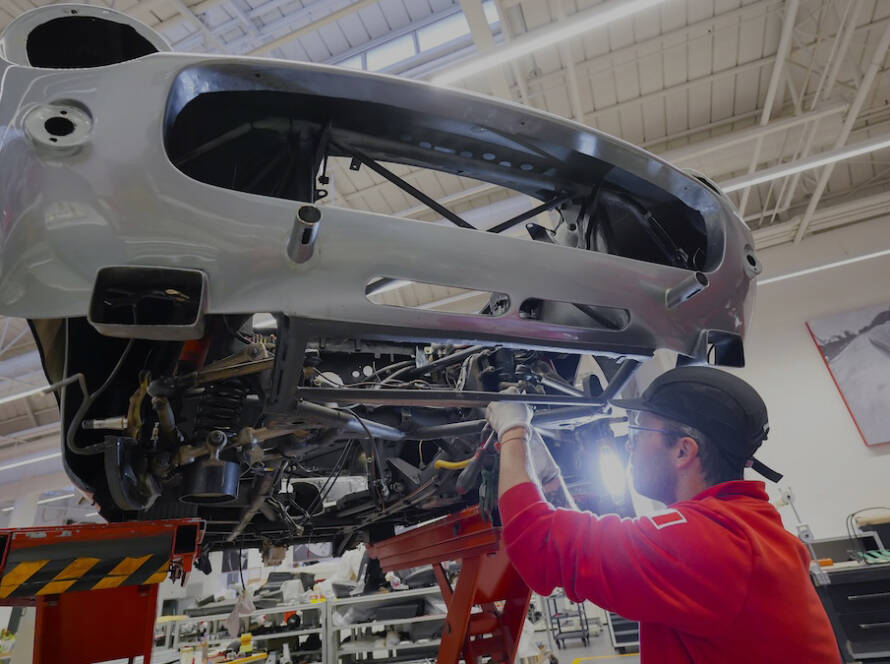
Ferrari platforms use engineered aluminum and composite assemblies that manage impact forces in a specific, calculated sequence.
OEM components help preserve:
- Metallurgical Compatibility
- Factory Load Distribution
- Chassis Rigidity
- Bonding Integrity
Modern Ferrari platforms revolve around extremely precise material and dimensional standards.
This isn’t complexity for its own sake. It’s what makes a modern Ferrari perform — and protect its occupants — the way it was designed to.
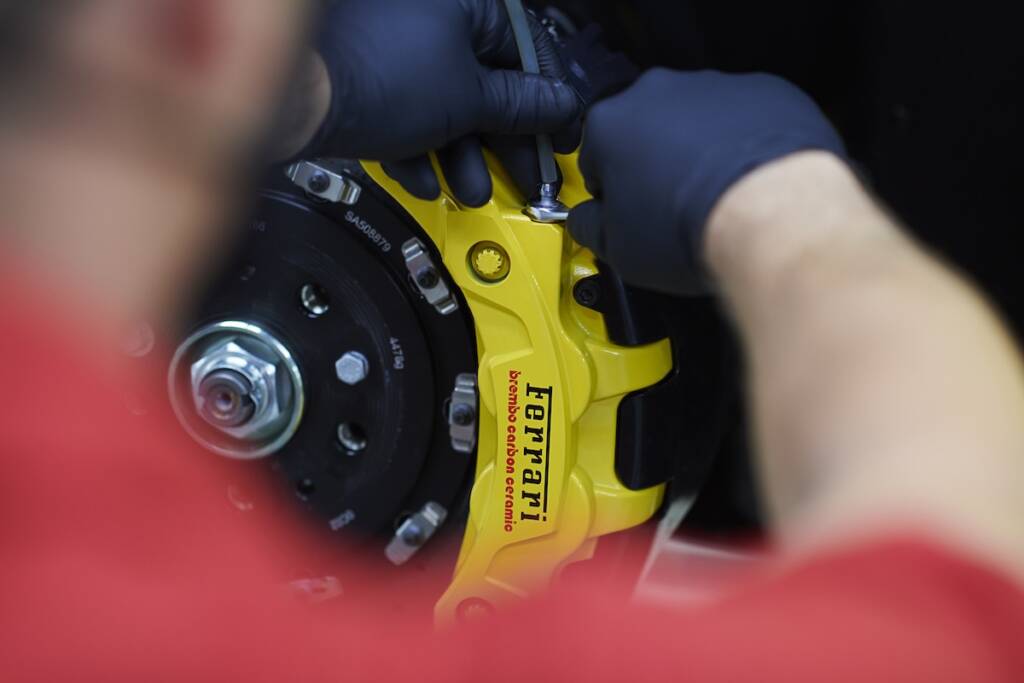
OEM vs Aftermarket Comparison
| Engineering Attribute | Genuine Components | Alternative Parts |
|---|---|---|
| Material Validation | ●Factory-certified alloys | Unverified composition |
| Dimensional Accuracy | ●Exact blueprint fitment | Reverse-engineered tolerances |
| Crash Dynamics | ●Preserved load paths | Unverified energy transfer |
| Bonding Compatibility | ●Verified for SPR & adhesives | Unknown response |
| Serialization | ●Factory tracking identifiers | Limited or absent documentation |
The Risks of Salvage & Reconditioned Components
Insurers sometimes recommend salvaged or “Opt-OEM” parts to reduce claim costs. On a standard vehicle, that’s a manageable trade-off. On a Ferrari aluminum space-frame, it’s a different situation.
Aluminum from a prior collision may carry internal stress damage or micro-cracking that looks fine on the surface. There’s no way to verify what a salvaged structural part has been through.
For many Ferrari owners, the concern isn’t only safety — it’s documentation. Unverifiable components in a repair history affect authenticity and resale value.
Why Ferrari Panel Fitment & Tolerances Matter
Ferrari panels aren’t just cosmetic — they’re functional aerodynamic components.
Even minor deviations in alignment can disrupt airflow, cooling, and stability. At the speeds a Ferrari is capable of, close enough isn’t close enough.
Aftermarket panels are not manufactured to Ferrari’s aerodynamic tolerances. Factory panels are.
Ferrari Sensors, Electronics & ADAS Compatibility
Modern Ferraris integrate driver-assistance systems directly behind exterior panels. Those systems need correct geometry, material depth, and mounting alignment to function accurately.
Four variables affect calibration:
- Panel Geometry
- Material Composition
- Paint Depth
- Mounting Alignment
Factory-authorized facilities can perform translucency verification and paint-depth testing to confirm that radar signals pass through panel materials correctly.
This isn’t a step that improvised repairs can replicate.
Protecting Long-Term Vehicle Provenance
A Ferrari is an asset in a way that most vehicles aren’t. In the collector and exotic market, provenance — the documented, verifiable history of a car — directly affects value. Buyers at this level ask questions: What was repaired? What parts were used? Who performed the work?
Serialized OEM components, factory-authorized repair records, and certified restoration documentation all contribute to answers that hold up under scrutiny.
Repairs made with unverified parts, or performed outside manufacturer guidelines, leave gaps that are difficult to close later.
Why Insurance Companies Recommend Alternative Parts
Insurers work within cost structures designed to reduce claim expenses. Their default estimates aren’t written with Ferrari engineering standards in mind.
How it typically unfolds:
- Initial estimates prioritize lower component costs.
- Alternative or salvage parts may be proposed.
- Disassembly reveals complete restoration requirements.
- Documentation supports certified replacement standards.
- Factory-guided procedures validate final restoration scope.
A factory-authorized facility can submit manufacturer position statements explaining why alternative parts don’t meet Ferrari’s standards — documentation that matters for the repair and the car’s history.
You have the right to choose your repair facility. Your insurer can recommend shops, but the decision is yours.
FAQs About OEM Ferrari Collision Parts
Can aftermarket Ferrari parts affect structural integrity?
Yes. Alternative structural components may not match Ferrari metallurgy, dimensional tolerances, or bonding standards.
What is the risk of using salvaged Ferrari aluminum parts?
Previously damaged aluminum structures may contain hidden stress damage or internal micro-cracking.
Do aftermarket body panels affect Ferrari aerodynamics?
Yes. Minor inconsistencies in panel fitment can alter airflow behavior and aerodynamic balance.
Can non-OEM panels interfere with Ferrari sensors?
Yes. Variations in material thickness and geometry can affect ADAS calibration and radar functionality.
Why are serialized Ferrari components important?
Factory serialization helps support originality verification and long-term provenance tracking.
Can uncertified repairs affect resale confidence?
Yes. Undocumented structural repairs or uncertified components can negatively affect buyer confidence and originality verification.
What documentation helps preserve Ferrari vehicle value?
Factory-authorized repair records documenting OEM components and certified restoration procedures help preserve provenance.
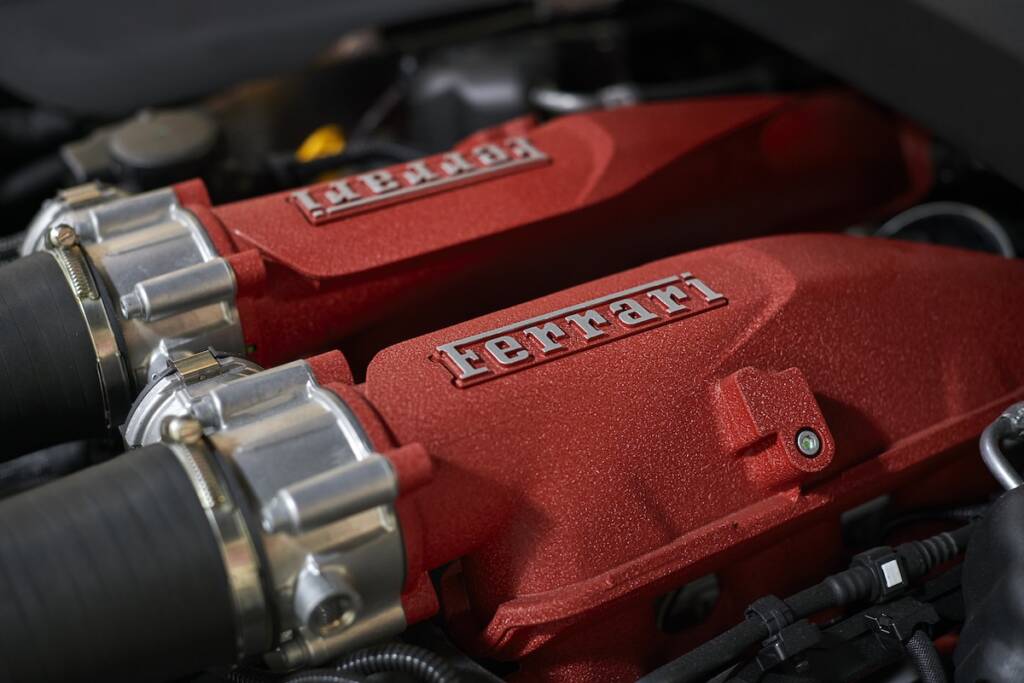
Preserving Ferrari Integrity
A collision doesn't have to compromise your Ferrari — but the repair has to be done right.
Following a collision, OEM Ferrari components help maintain originality, documentation continuity, and long-term ownership confidence throughout the reconstruction process.
Learn more about our Ferrari standards and factory-authorized restoration procedures.
REPAIR INSIGHTS