Home > Blog > Bench Jig System > The Reality Of Ferrari Structural Component Replacement
Share this post:
Quick Takeaways
- Factory seam architecture: Components split only at original factory assembly joints
- Zero mid-span sectioning: Mid-span cuts alter load paths and crash behavior
- Thermal weakening: Welding creates a HAZ that softens the aluminum’s grain structure
- Provenance preservation: Factory procedures maintain chassis dimensions for long-term value
Table of Contents
Why do Ferrari structural components require full replacement?
Ferrari structural components require complete module replacement because aluminum space-frames rely on continuous engineered load paths, factory-designated bonding locations, and model-specific tolerances that cannot be safely replicated through mid-span sectioning or sleeve splicing.
Replacing components at factory assembly seams preserves torsional rigidity, crash cell safety margins, and long-term asset value.
Why Ferrari Components Can't Be Traditionally Sectioned
In conventional collision repair, technicians cut a damaged structural rail mid-span and splice in a replacement segment. On steel consumer vehicles, this is standard practice.
Ferrari’s non-ferrous structures are engineered as continuous, uninterrupted energy-management paths. An uncertified mid-span splice transforms a predictable safety cell into a structural liability.
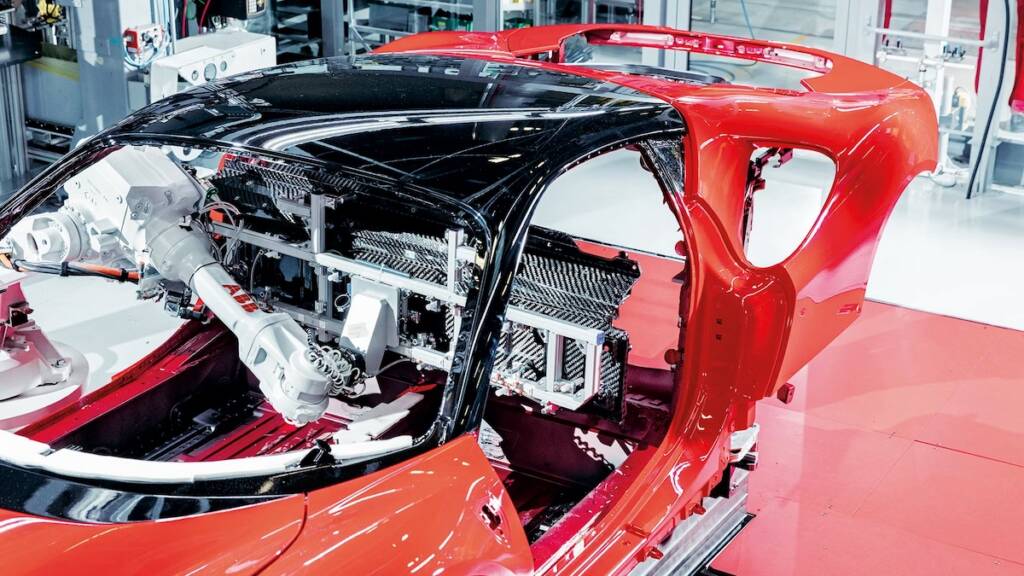
Understanding Ferrari Aluminum Castings & Extrusions
Ferrari’s structural foundation uses three distinct aluminum component types — each optimized for a specific behavior under operational and impact loads.
Aluminum extrusions
Multi-hollow profiles forming the longitudinal chassis rails and primary impact beams. Designed to deform progressively and absorb energy during severe impact.
Structural castings
Heavy-duty aluminum nodes at shock towers, suspension pickup points, and cabin corners. Prioritize absolute dimensional rigidity — tolerate zero deformation.
Stamped sheet matrixes
High-strength aluminum sheets forming cabin floorboards and structural interior bulkframes.
Each relies on factory thermal precipitation hardening — characteristics that can’t be replicated through aftermarket manipulation. See how these structures are restored to factory specification.
How Collision Energy Alters Structural Load Paths
Aluminum distributes kinetic impact forces with exceptional efficiency across the entire space-frame. Collision energy rarely stays localized — it travels instantly down the longitudinal extrusions to the rigid casting nodes.
THE HIDDEN DAMAGE PROBLEM
If impact force exceeds engineered thresholds, subsurface stress fractures and dimensional shifting can occur at structural junctions far from the visible point of impact. Repairing only what’s visible leaves the chassis structurally compromised.
Factory Replacement Points Vs. Mid-Span Sectioning
Ferrari structural repair manuals establish definitive, engineered parameters for component separation. There is no room for shop-floor interpretation.
| Mid-span sectioning | Cuts rail at arbitrary mid-span points | Splits only at factory laser weld seams |
| Module replacement | Splices in partial replacement segment | Full module removed and replaced |
| Structural joining | Introduces unauthorized weld joints | Structural epoxy & SPR riveting only |
| Crash integrity | Alters engineered crash load paths | Preserves original energy-management path |
| Heat exposure | Creates HAZ — up to 50% strength loss | No heat applied to structural alloy |
Why OEM Structural Procedures Matter
Ferrari space-frames function as a single, harmonious safety cell — the chassis, suspension geometry, and active electronics operate in lockstep. OEM structural procedures ensure every replacement component matches the exact metallurgical composition and dimensional profile of the original assembly line.
Straying from factory-guided restoration introduces structural variables that compromise crash behavior, suspension tracking consistency, and long-term ownership confidence.
The Risks Of Uncertified Structural Splicing
The core reason Ferrari prohibits mid-span rail sectioning is what happens to structural aluminum under thermal duress.
- Grain structure alteration: Manual welding generates extreme localized temperatures that permanently alter the alloy’s grain structure several inches beyond the weld bead
- Metallurgical softening: The resulting heat-affected zone (HAZ) causes 6000 or 7000-series aluminum to lose up to half of its engineered yield strength
- Stress concentration: The interface between the weld and softened alloy creates a fracture-prone zone under normal lateral loads — and a failure point in future impacts
The same material vulnerabilities that make mid-span sectioning dangerous also explain why Ferrari aluminum repair requires isolated facilities with dedicated non-ferrous environments — contamination and heat are the two threats the entire process is built around.
How Ferrari Structural Replacement Is Performed
Factory-compliant replacement follows a precise sequence on a dedicated fixture bench — no shortcuts at any stage.
Mechanical stripping:
All assemblies stripped to isolate the bare structural space-frame
Fixture-bench anchoring:
Chassis secured to steel reference datums on a Car Bench or Celette calibration platform
Factory seam release:
Original laser weld lines or adhesive seams traced and separated using non-impact tooling
Substrate prep:
Joining surfaces cleaned to raw metal — zero chemical or ferrous contamination
OEM component integration:
Serialized factory component fused using structural epoxies and hydraulic self-piercing riveting (SPR)
The fixture bench used in this process is the same system that restores factory chassis geometry after collision — anchoring the space-frame to exact manufacturer reference points at every stage.
FAQS About Structural Component Replacement
Why is mid-span sectioning forbidden on a Ferrari rail?
It creates a heat-affected zone (HAZ) that severely weakens the aluminum’s grain structure and alters the engineered safety path — making the chassis unpredictable in a future impact.
What is an aluminum structural casting?
Rigid, high-load aluminum nodes at shock towers and suspension mounts that prioritize dimensional perfection. They cannot be safely pulled, straightened, or repaired — only replaced.
How do technicians know where to split a Ferrari frame?
Strictly by following official manufacturer repair schematics that dictate exact structural boundaries at original factory laser weld tracks or engineered seams — no shop-floor interpretation.
How does a factory-approved cold-joining repair work?
Aerospace-grade structural bonding epoxies paired with hydraulic self-piercing rivets (SPR) join components without generating the heat that compromises aluminum metallurgy.
Can uncertified splicing affect Ferrari's warranty?
Yes. Unapproved sectioning or non-certified structural modifications can invalidate Ferrari’s factory structural anti-perforation and corrosion warranties.
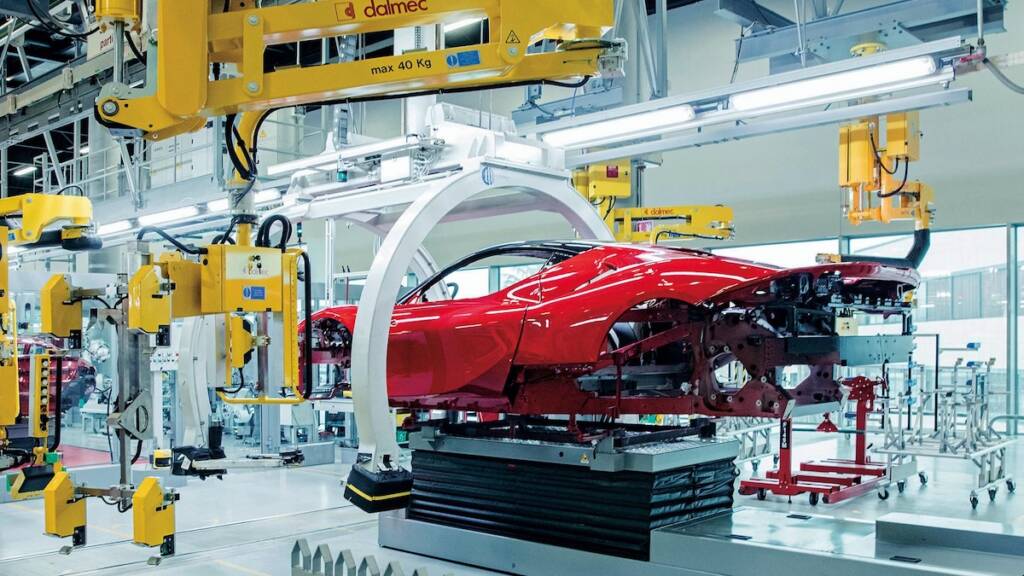
Preserving Ferrari Structural Integrity
Maintaining the mechanical rigidity, crash protection, and long-term market value of a Ferrari requires a structural replacement methodology with zero alternative compromises.
Look for a facility operating with vehicle-specific fixture benches, isolated non-ferrous workspaces, and verified factory protocols at every stage.
REPAIR INSIGHTS