Home > Blog > Collision Repair > What Is ADAS Calibration, and Why Does It Matter After a Repair?
Share this post:
Quick Takeaways
- Small shifts matter. A sensor that moves a fraction of a degree can misread the road.
- A sensor doesn’t have to be hit. Bumper removal, windshield replacement, and alignments can all trigger calibration.
- Paint can blind radar. Too much filler or paint over a bumper-mounted radar weakens its signal.
Table of Contents
ADAS calibration is the process of aiming a car’s driver-assist cameras and radar back to the exact angles the manufacturer set at the factory. Those sensors run features like automatic emergency braking, adaptive cruise, and lane keeping, and they only work if they see the road from the right position.
Any repair that moves a sensor can throw it off, including a bumper replacement, new windshield, wheel alignment, or structural repair. On a luxury or exotic car, where sensors sit behind painted composite bumpers and the electronics are brand-specific, getting calibration right is as important as the bodywork.
What ADAS Does on a Modern Car
ADAS stands for Advanced Driver Assistance Systems, a network of cameras, radar, ultrasonic sensors, and software that watches the road around the car. Depending on the model, it can include:
- Automatic emergency braking
- Adaptive cruise control
- Lane departure warning and lane keep assist
- Blind spot monitoring
- Parking sensors and surround-view cameras
- Traffic sign recognition
The sensors work as a team. Radar measures the distance and speed of other vehicles, cameras read lane lines and signs, and steering and motion sensors check the driver’s inputs. If one sensor’s aim is off, the whole system makes decisions on bad data.
When Does a Car Need ADAS Calibration?
Most manufacturers require calibration any time a sensor or its mounting point is disturbed, even if the sensor itself was never damaged. Common triggers:
- Collision repair: impact energy can shift brackets across the front of the car, even where nothing looks damaged.
- Bumper removal or replacement: front and rear radar often mount behind the bumper cover.
- Windshield replacement: the forward camera is mounted to the glass.
- Wheel alignment: changes the thrust angle the cameras and radar use as a reference.
- Suspension work or ride height changes: alters the sensors’ view of the road.
- Structural repair: can move sensor mounting points, which is why it always follows frame damage repair.
- A warning light: an ADAS fault message after any work is a sign the system needs to be checked.
That’s why calibration is a standard step in luxury car collision repair, not an add-on.
Where ADAS Sensors Are Mounted
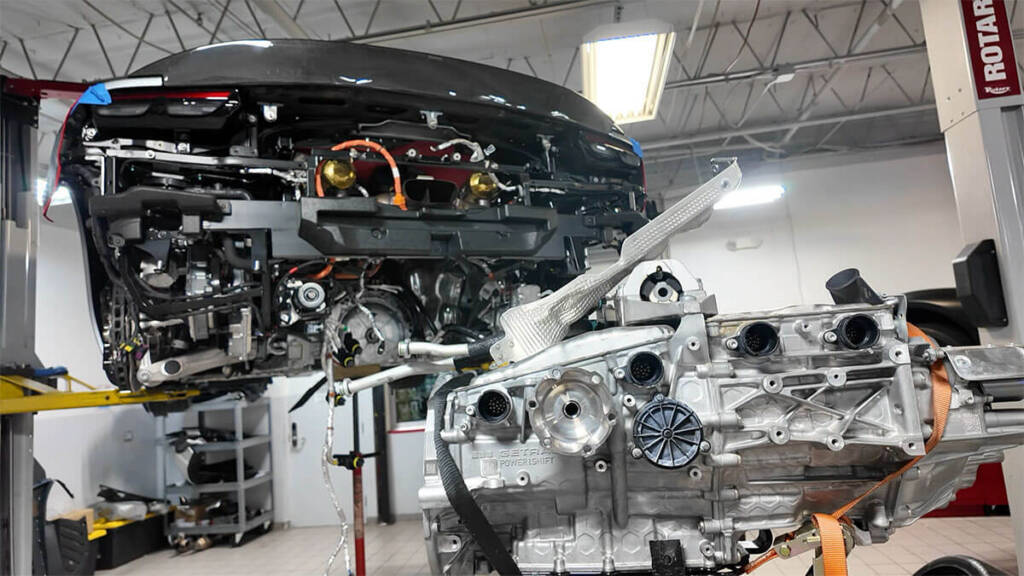
On most luxury and exotic cars, the sensors are hidden behind glass, bumper covers, and body panels, which is exactly why routine repairs disturb them.
Windshield
Forward camera
Reads lane lines, signs, and vehicles ahead for lane keeping and emergency braking.
Front grille & bumper
Long-range radar
Measures distance and speed for adaptive cruise and automatic emergency braking.
Rear corners
Short-range radar
Watches the blind spots and cross traffic behind the car.
Bumpers
Ultrasonic sensors
Detect nearby objects for parking assist and proximity alerts.
Mirrors & fascias
Surround-view cameras
Stitch together the overhead view used for parking and tight maneuvers.
Why Paint Thickness Matters
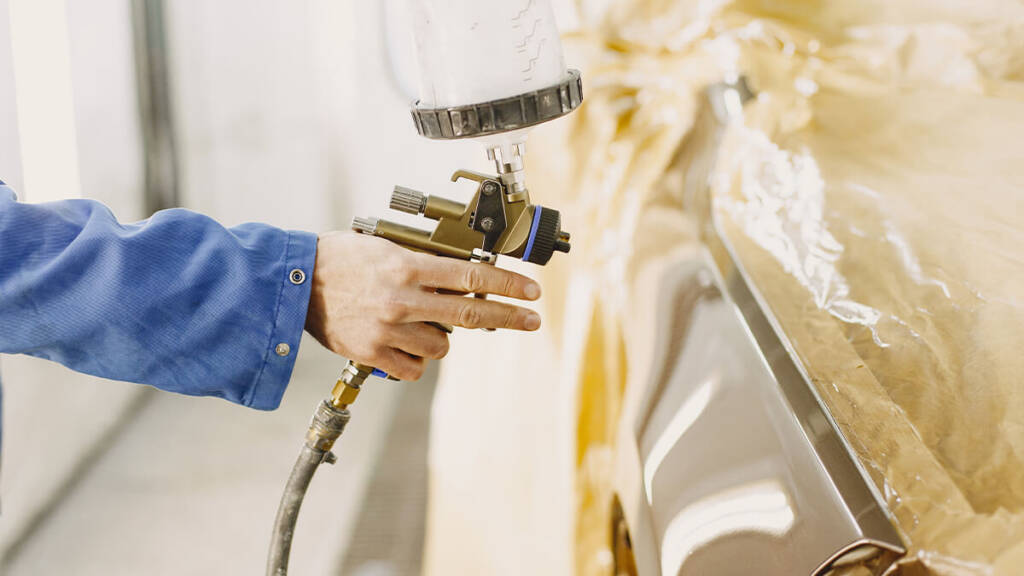
Radar has to see through the bumper cover. Too much filler, primer, or paint over a radar sensor can weaken its signal, so a proper car paint repair controls film thickness as carefully as it matches color.
This matters more on luxury and exotic cars. Their bumper covers are often variable-thickness composite panels finished in multi-stage paint, not the thin, uniform covers on a mass-market car. A good shop measures paint thickness with a gauge during the repair to keep the radar working.
Static vs. Dynamic ADAS Calibration
There are two ways to calibrate ADAS, and the manufacturer’s procedure decides which one a sensor needs. Many cars need both.
In the shop
Static Calibration
The car sits on a level floor while calibration targets are placed at exact distances and heights from its centerline. The car's software reads the targets and resets each sensor's aim to factory values.
Typically used for: forward cameras, front radar, and surround-view cameras.
On the road
Dynamic Calibration
With a diagnostic tool connected, the car is driven at set speeds on well-marked roads so the sensors can learn real lane lines and traffic. Calibration is complete only when the software confirms consistent tracking.
Typically used for: lane-keeping cameras and blind-spot radar on many models.
Why the Right Diagnostic Tools Matter
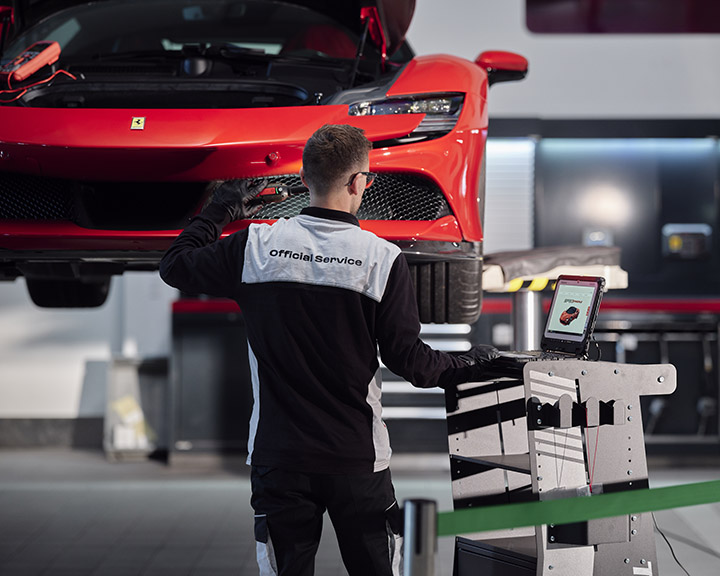
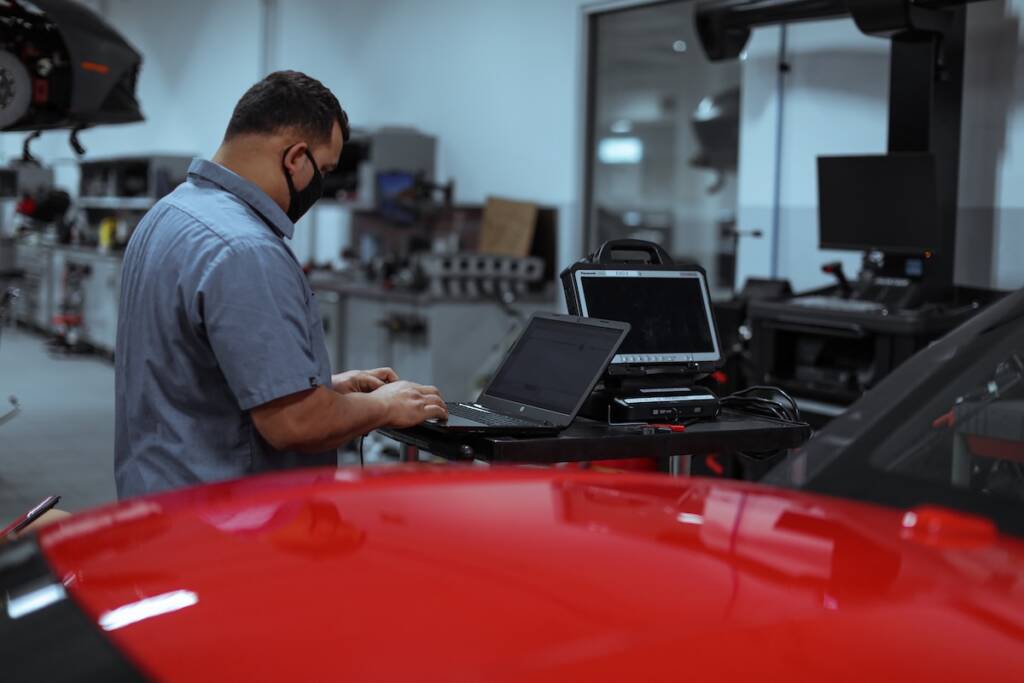
Calibration depends on talking to the car’s computers. Many luxury and exotic brands use proprietary software that general-purpose scan tools can’t fully access, so the job calls for the manufacturer’s own diagnostic platform and procedures.
Without that access, a shop can clear a warning light without fixing the misalignment behind it, leaving a clean dashboard while the safety system stays off. Our ADAS calibration work ends with a documented result for every sensor, not just a cleared code.
FAQs About ADAS Recalibration
How long does ADAS calibration take?
Often a few hours. It runs longer when several systems need calibrating or a sensor needs a dynamic calibration drive after the static setup.
Does a bumper repair require ADAS calibration?
Often, yes. Removing or replacing a bumper cover can move the radar and parking sensors behind it, so most manufacturers require calibration afterward.
Do you need ADAS calibration after a wheel alignment?
Many manufacturers require it. An alignment changes the angle the car travels on, and the cameras and radar use that angle as their reference.
Does windshield replacement require camera calibration?
Yes, on any car with a windshield-mounted camera. New glass shifts the camera’s angle slightly, so the camera has to be recalibrated.
Can I drive my car before ADAS calibration?
Usually, but driver-assist features may be limited, switched off, or unreliable until calibration is done. Drive with that in mind and get it calibrated as soon as possible.
Does insurance pay for ADAS calibration?
When calibration is required as part of an accident repair, it’s usually included in the claim. Documentation showing the manufacturer requires it helps get it approved.
Does a Ferrari need ADAS calibration after collision repair?
Yes, on any Ferrari equipped with driver-assist cameras or radar. Calibration follows Ferrari’s factory procedures and uses Ferrari’s diagnostic platform.
Calibration After Repair
Calibration Done Right at Ferrari Coachworks
Calibration is part of every repair, not an add-on. We restore the structure and paint, then complete ADAS calibration on your luxury or exotic car to factory procedures.
REPAIR INSIGHTS