Home > Blog > Collision Repair > How to Choose a Body Shop for a Luxury or Exotic Car
Share this post:
Quick Takeaways
- Verify certification with the manufacturer where a program exists, not on the shop’s website. Where one doesn’t, ask about training and experience with your make.
- Ask who does each part of the repair. Aluminum, carbon fiber and ADAS calibration are sometimes handled by outside specialists, so ask who they are and how the work is checked.
- The repair should follow the manufacturer’s published procedure for your model, including the scans, measurements and calibrations it calls for.
- In most cases you choose the shop, and the documentation you get back supports future inspections, resale and any claim.
Table of Contents
To choose a body shop for an exotic car, verify its qualifications with your car’s manufacturer, confirm its experience with your make or comparable construction, and ask how it follows the factory repair procedure. Then ask who performs the aluminum, carbon fiber, calibration and paint work, how your insurer is handled, and what documentation you will receive.
01
Manufacturer certification where available, or relevant training and experience
02
Factory repair procedures for your model
03
Who repairs aluminum and carbon fiber
04
ADAS calibration, and who performs it
05
A controlled paint environment
06
Repair documentation at delivery
07
Direct experience with your insurer
08
Low-clearance transport and secure storage
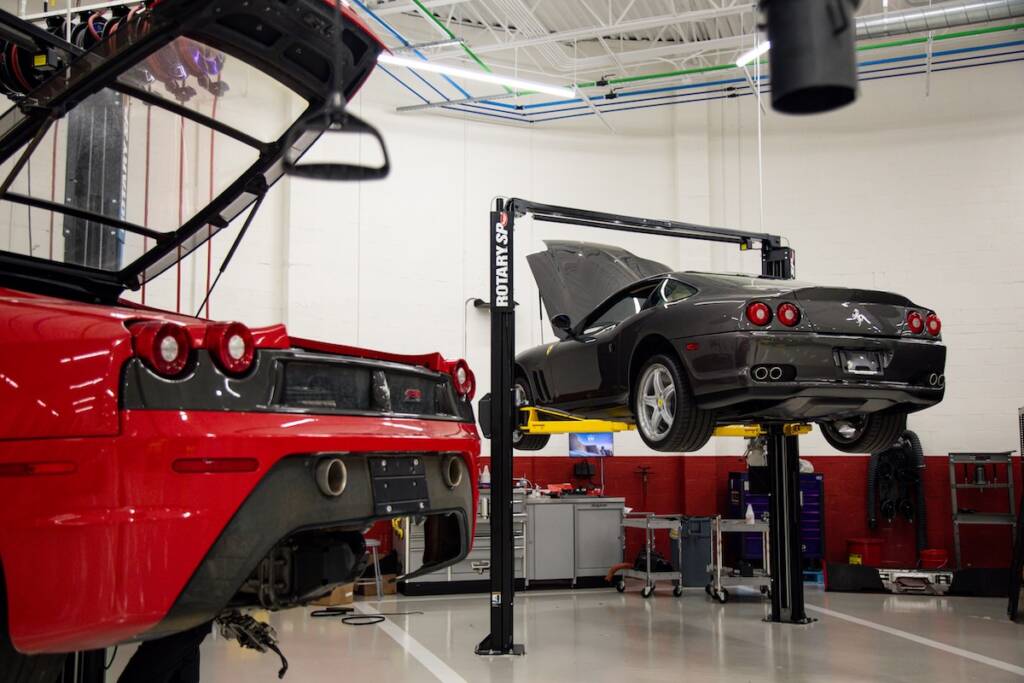
Need A Luxury Or Exotic Body Shop?
Ferrari Coachworks specializes in collision repair for luxury and exotic vehicles in South Florida. Explore our repair services to learn more about your repair options.
Verify Certification or Relevant Qualifications
Where a manufacturer runs a certification program, it means the shop’s tools, training and facility were audited against that brand’s standard. Programs are issued brand by brand, and requirements differ, so a shop certified for one make is not automatically qualified for another.
Not every make has a program, so ask what qualifies the shop for your car specifically. Where a program exists, confirm it through the manufacturer’s certified collision locator or your dealer’s service department.
| Credential | What It Proves | How to Verify |
|---|---|---|
| OEM Certification | The shop's tools, training and facility meet one manufacturer's standard, for that brand only. Requirements differ between programs. | The manufacturer's certified collision locator or your dealer's service department. |
| I-CAR Gold Class | Technicians have completed current industry collision training across roles. | I-CAR's public shop search. |
| "Exotic Specialist" | Nothing on its own. It is a marketing description. | Ask to see recent repairs on your model, along with their repair files. |
Important: Not every manufacturer runs a certification program. Where yours does, that is the credential to check first.
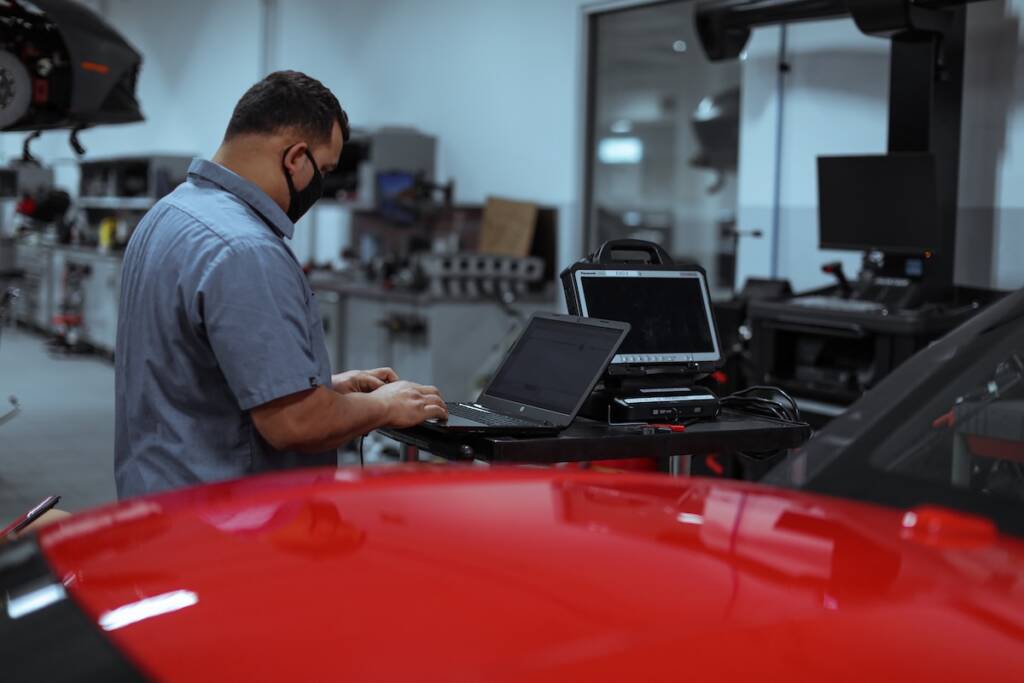
Ask Which Repair Procedures They Follow
Manufacturers publish repair procedures for each model, covering sectioning points, joining methods and which parts cannot be reused. A good shop pulls the procedure for your car before the estimate is final.
Where the damage and procedure call for it, the structure should be measured against factory dimensions on a bench or measuring system, before and after repair.
Ask Who Repairs Aluminum and Carbon Fiber
Most exotics are built around aluminum structures, carbon fiber, or both, and the right repair method depends on the manufacturer and the damaged part. We cover why aluminum needs its own space in why aluminum repair needs a dedicated facility.
If a specialist handles part of the work, ask who they are and which procedure they follow. How the two materials are repaired differently is covered in Ferrari carbon fiber vs aluminum repairs.
Aluminum Repair
Look for:
A separated bay with its own tools and dust extraction, plus riveting and bonding equipment.
Ask:
“Who repairs aluminum on my car, and in what kind of space?”
Carbon Fiber
Look for:
A clear answer on the manufacturer’s position for each damaged part. Many structural carbon components are replacement-only.
Ask:
“Does the procedure allow this part to be repaired, or does it call for replacement?”
Mixed Materials
Look for:
Joining equipment your model’s procedure specifies, such as self-piercing rivets and structural adhesives.
Ask:
“Which joining methods does my car’s procedure call for?”
Confirm Whether ADAS Calibration Is Required
Cameras, radar and parking sensors often sit in the bumpers, mirrors and windshield that an accident damages. When the manufacturer’s procedure calls for recalibration after a repair, it should be done to that specification and documented in a report you receive.
Some shops calibrate in-house and some use a specialist. Either can be right, so ask who performs it, which procedure they follow and who checks the result. More in why Ferrari ADAS systems require recalibration after collision repair.
Look at the Paint Environment
Exotic finishes are often multi-stage colors, tinted clears or special-order paints that are hard to match. Ask to see the paint booth, which paint system is used, and how color is matched before it goes on the car.
A good answer includes test panels compared against your car, and blending into adjacent panels where needed. See our paint refinishing process.
Ask What Documentation You Will Receive
The repair file records what was done and how. It is what a future buyer’s inspector, an insurer or a claim will look at, so ask what it will contain before you commit.
01
Intake
Damage photos and any pre-repair scan the procedure calls for.
02
Teardown
Photos of hidden damage and a revised estimate.
03
Procedure
The manufacturer’s repair procedure for your model.
04
Structure
Measurements against factory dimensions, where structural work was done.
05
Parts
Invoices showing genuine part numbers.
06
Paint
Paint system used and color-match records.
07
Calibration
Calibration reports for any systems the procedure required.
08
Delivery
Post-repair scan where required, final photos and a written warranty.
A complete file can also support a diminished value claim where one is available, such as after an accident caused by another driver. Documentation supports a correct repair; it does not replace one.
Understand How They Work With Your Insurer
In most cases you choose where the car is repaired, though your policy terms matter, and Florida law addresses when an insurer requires a particular facility. We explain your options in Choose Your Own Ferrari Repair Facility.
What matters next is how the shop handles the claim. Ask whether it writes the estimate after teardown, negotiates supplements with the adjuster, and documents why genuine parts are required.
“Under Florida law, motor vehicle repair shops must register with the Florida Department of Agriculture and Consumer Services. For repairs exceeding $150, customers must be offered the choice of requesting a written estimate, setting a spending limit that requires additional authorization if exceeded, or declining a written estimate.”
Ask How the Car Gets There and Where It Is Stored
Low ride height and damaged suspension make a wheel-lift tow risky on an exotic. Ask how the shop arranges low-clearance transport, whether enclosed transport is available, and whether it is insured.
While it is in the shop, the car should be stored indoors in a secured, monitored facility. Ask what happens to it overnight and on weekends.
Frequently Asked Questions
Can a dealership body shop repair an exotic car?
Some dealer groups run certified collision facilities, and many don’t. Ask the same questions either way, because a dealer name on the building doesn’t replace brand certification.
How long does an exotic car collision repair take?
It depends on the damage and on parts, which for low-volume models often ship from the manufacturer overseas. A good shop gives you a timeline after teardown and updates you when parts ship.
Should I get more than one estimate?
You can, but estimates written from photos or a walk-around miss hidden damage on most exotics. Compare how each shop builds its estimate, not only the number.
Will my insurance pay for genuine parts?
It depends on the policy. Few non-OEM parts are made for low-volume exotics, and some insurers offer an OEM parts endorsement, so check yours. More in OEM vs aftermarket Ferrari parts.
Does a repair outside factory procedures affect my warranty?
Collision damage itself isn’t covered by a new-car warranty. A repair that doesn’t follow the factory procedure can complicate coverage on the parts it touched, which is one more reason to keep the repair file.
The Right Repair Starts With The Right Team
Your exotic deserves specialized attention. Connect with Ferrari Coachworks to discuss your vehicle’s collision damage and explore the next steps toward repair.
REPAIR INSIGHTS