Home > Blog > Paint Refinishing > Clear Coat Peeling Repair: Why Paint Fails in the Florida Sun
Share this post:
Peeling or faded?
Clear Coat & Sun Damage Repair
From peeling clear coat to factory color matching, our paint repair specialists restore luxury and exotic finishes.
Specialized paint repair at our Pompano Beach facility.
Quick Takeaways
- Clear coat fails in stages, and only the early ones can be polished back.
- Peeling clear coat can’t be touched up. New clear won’t bond to a layer that is already letting go.
- The roof, hood and trunk usually go first because they take the most direct sun.
- Sun damage is usually treated as wear, so insurance rarely covers it.
Table of Contents
Clear coat peeling repair starts with understanding why the paint failed. The clear coat is the transparent top layer that protects the color underneath and gives the finish its depth. In strong sun, it breaks down slowly, then all at once — first losing its gloss, then turning hazy, and finally lifting away from the paint like a sunburn.
By the time it peels, the repair has changed from polishing to refinishing. Here is how that progression works, why South Florida accelerates it, and what a correct repair involves.
Four Stages of Clear Coat Failure
Sun damage moves in one direction. The first two stages can often be polished back. Once the clear coat starts to lift, the only fix is refinishing.
Can often be restored
01
Loss of gloss
The finish looks flat, mostly on the roof and hood.
The fix: usually machine polishing and protection.
02
Hazing
A milky, chalky film that doesn’t wash off.
The fix: correctable if enough clear coat remains.
Has to be refinished
03
Peeling
The clear lifts at the edges, like peeling sunburn.
The fix: failing clear removed, panel refinished.
04
Exposed color
The color underneath turns dull, faded and rough.
The fix: full refinish, blended into adjacent panels.
What Sun Damage Does to Car Paint
Clear coat contains UV absorbers that protect the layers beneath it. Every hour in direct sun uses some of that protection up. Once it is depleted, ultraviolet light starts breaking down the clear coat itself, and the finish loses gloss, then clarity, then adhesion.
Heat adds to it. A dark panel in the South Florida sun gets hot enough to expand noticeably, then contracts again at night. Years of that cycle stress the bond between the clear coat and the color, which is why sun damage shows up as peeling rather than just fading.
Why the Roof, Hood and Trunk Go First
Horizontal panels face the sun most directly, for most of the day. They also collect what accelerates the damage: bird droppings, tree sap and lovebug residue are all acidic, and in the heat they etch into the clear coat within days if they are not washed off.
That is why a car can have a peeling roof and hood while the doors still look new. It also means the repair is often limited to a few panels rather than the whole car.
Why Peeling Clear Coat Can't Be Touched Up
Once clear coat starts to lift, the layer is no longer properly bonded to the color beneath it. Spraying new clear over the top traps that failure underneath, and the edges continue to lift, taking the new coating with them.
Touch-up products have the same problem on a smaller scale. A correct repair removes the failing clear entirely, back to a layer that is sound, and refinishes from there.
How Clear Coat Peeling Repair Works
Four steps, in this order. A step skipped here is one of the most common reasons a refinish starts peeling again.
01
Assessment
Each panel is checked for where the clear coat is still bonded and where it has failed. Previously repainted panels are flagged, since they often fail differently.
02
Removal
The failing clear is sanded back to stable material, and further if the color underneath has faded.
03
Refinishing
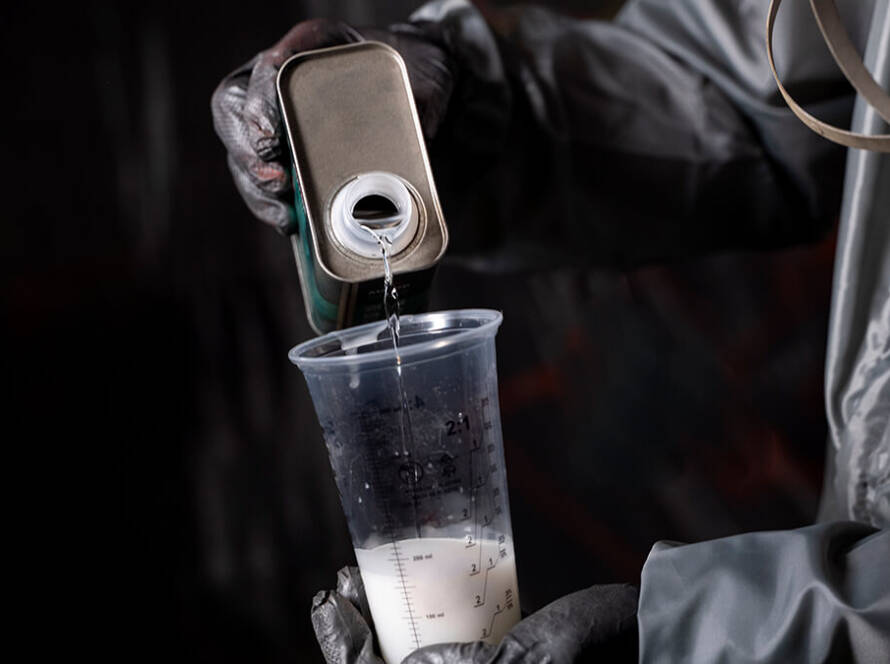
The color is mixed to your car’s paint formula, applied in the factory’s stages, and sealed with a fresh clear coat.
04
Blending and curing
The finish is blended into adjacent panels, cured and polished to match the rest of the car.
Our guide to car paint matching explains how the formula is confirmed, and why it matters that the work happens in a controlled paint booth.
Is Sun Damage Covered by Insurance?
Usually not. Insurers generally treat sun damage and clear coat failure as gradual wear rather than sudden, accidental damage, so it falls outside most auto policies.
The exception is when panels are damaged in an event your policy does cover, such as a collision, in which case our collision insurance claims team handles the claim with your carrier.
Protecting Paint in South Florida
Shade. A garage or covered parking does more than anything else to slow UV damage.
Prompt washing. Removing droppings, sap and lovebug residue quickly stops them etching into the clear coat in the heat.
Protection. Wax, sealant or a ceramic coating adds a sacrificial layer over healthy paint, and paint protection film shields the panels that take the most exposure. None of them can restore a clear coat that has already started to fail.
PEELING OR FADING?
Find Out What the Finish Needs
Not every dull panel needs a repaint. Our paint team inspects the clear coat panel by panel and tells you where it can be restored and where it has to be refinished.
In-house paint shop · Factory color matching
FAQs About Clear Coat Peeling Repair
Can you fix peeling clear coat without repainting?
No. Once clear coat has started to lift, polishing cannot reattach it. The failing layer has to be removed and the panel refinished. Polishing only helps at the earlier stages, when the finish is dull or hazy but still bonded.
Can you spray new clear coat over peeling clear coat?
Not successfully. New clear won’t bond properly to a layer that is already failing, and the peeling continues underneath, lifting the new coat with it.
Does clear coat peeling keep spreading?
Yes. Once the edges lift, sun, heat and moisture work underneath them, and pressure washing or automatic car washes can speed it up. Having it assessed early can keep the repair to fewer panels.
Does factory paint peel, or only repainted panels?
Both can, given enough sun exposure. Previously repainted panels often fail sooner, especially if steps were skipped in the original refinish, which is one reason each panel is assessed individually.
Will a ceramic coating stop clear coat from peeling?
It can slow UV and contamination damage on paint that is still healthy. It cannot repair or stop failure that has already begun, and coating over peeling clear only seals the problem in.
Ferrari Coachworks · Pompano Beach FL
Paint Restored to Its Original Depth
Failing clear coat removed, color matched to your car's original formula, and the finish rebuilt in our own downdraft paint booth.
Multi-stage and tri-coat finishes · Panels blended to match
REPAIR INSIGHTS