Home > Blog > Paint Refinishing > Why the Paint Booth Matters as Much as the Painter
Share this post:
Quick Takeaways
- Downdraft airflow: clean air moves from ceiling to floor, pulling dust away from wet paint.
- Positive pressure: the booth pushes air out when the door opens, so shop dust can’t get in.
- Climate control: steady temperature and humidity let paint flow out smooth and even.
- Infrared curing: heats the panel from the inside out to lock in gloss without pinholes.
Table of Contents
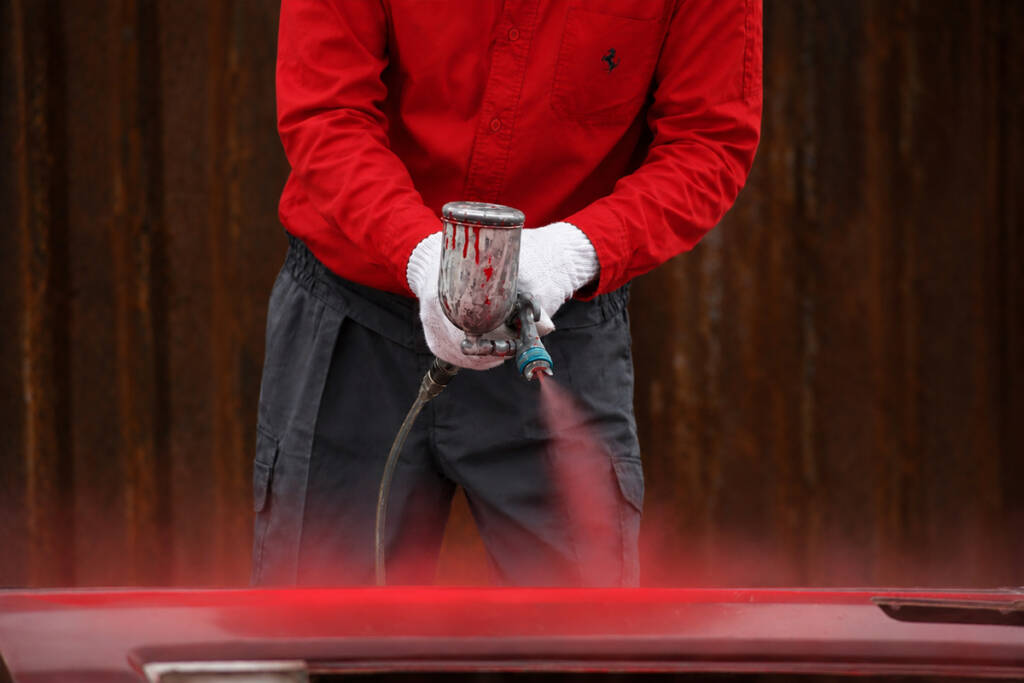
A downdraft paint booth pulls filtered air from the ceiling straight down past the car and out through the floor, carrying dust and overspray away from wet paint before it can land on the finish.
On luxury and exotic cars, the booth is half the result. Deep, glossy finishes show every speck of dust and every uneven patch of texture, so the environment matters as much as the painter’s skill in any car paint repair.
Why the Booth Shapes the Finish
Factory paint is sprayed in a sealed, climate-controlled line. A repair has to recreate those conditions, because airflow, dust, temperature, and humidity all affect how paint lays down and dries.
Get the environment wrong and even a perfect color match fails. Dust lands in the clear coat, texture comes out rough or blotchy, and gloss fades early.
A factory-level finish can’t happen in open shop air. Every variable, from how the air moves to the humidity in the room, has to be controlled.
How Dust Ruins Fresh Paint
Open shop air is full of particles you can’t see: clothing fibers, sanding dust, and drifting overspray. A single particle landing in wet clear coat leaves a small bump called a nib.
Fixing nibs costs clear coat. Each one has to be sanded and polished out, which thins the protective layer that keeps the paint looking deep and glossy for years.
That’s why a proper booth filters incoming air through ceiling filters before it ever reaches the car.
Downdraft vs. Crossdraft Paint Booths
Not all paint booths move air the same way. A crossdraft booth pulls air horizontally from the door to the back wall, dragging overspray across the car.
A semi-downdraft booth brings air in from the ceiling but exhausts it at the rear. A full downdraft booth moves air straight down from the ceiling to floor vents.
| Crossdraft booth | Downdraft booth |
| Air moves sideways across the car | Clean air enters through the ceiling |
| Overspray drifts over other panels | Air sweeps straight down past the car |
| Floor dust can lift onto wet paint | Dust is pulled down into floor vents |
| Exhaust at the back wall | Exhaust through floor grates |
| Opening the door disturbs airflow | Positive pressure keeps shop air out |
Positive pressure is the final safeguard. The booth keeps slightly higher air pressure than the shop around it, so when the door opens, air rushes out instead of shop dust rushing in.
Why Temperature and Humidity Matter
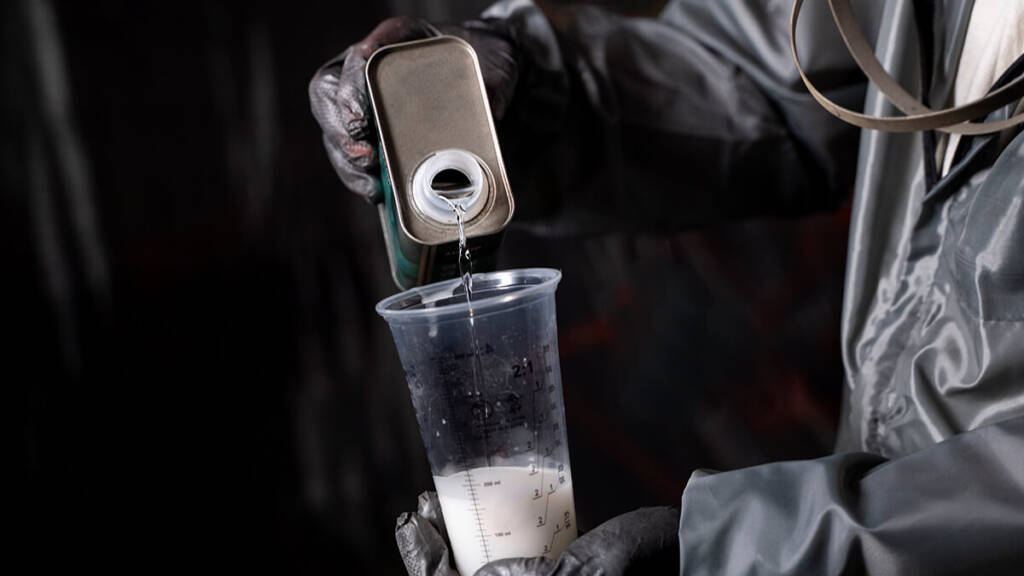
Paint behaves differently depending on the climate. When the booth is too cold, paint flows poorly and dries uneven. When it’s too hot, paint dries before it can level out, locking in a rough texture.
A proper booth holds temperature and humidity steady, typically around the low-to-mid 70s °F, through every coat. That consistency lets each layer level out evenly, so a repainted door matches the original paint on the panel next to it.
Waterborne Paint Needs Controlled Airflow
Most modern factory basecoats are waterborne, and water dries slower and less predictably than solvent. A good booth speeds and steadies that drying with controlled airflow between coats, preventing the trapped moisture that causes cloudy paint. Learn more about how waterborne and traditional paint differ.
Infrared Curing: Locking In the Gloss
Curing decides how long the finish lasts. A standard bake heats the paint from the surface down, which can trap solvent underneath and leave pinholes or shrinkage later.
| Method | Result |
| Standard bake cycle | Surface heats first → trapped solvent → pinholes and shrinkage over time |
| Infrared curing | Panel heats first → solvent escapes → even cure and lasting gloss |
Infrared curing works from the inside out. It heats the panel underneath the paint first, so trapped gases escape cleanly and the clear coat cures evenly. After curing, the finish is checked under multiple light sources, a step we cover in car paint matching.
FAQs About Paint Booths
What is a downdraft paint booth?
A sealed booth that brings filtered air in through the ceiling and pulls it out through floor vents, carrying dust and overspray straight down and away from the car.
Is a downdraft booth better than a crossdraft booth?
For automotive refinishing, yes. Crossdraft booths move air sideways across the car, which can drag overspray and dust onto wet panels.
What causes dust spots in a new paint job?
Particles that land in wet clear coat, usually from unfiltered air, dirty clothing, or sanding dust. A sealed booth with filtered, positive-pressure air prevents most of them.
Why is infrared curing better than a standard bake?
Infrared heats the panel from the inside out, so solvents escape cleanly. That prevents pinholes and helps the gloss last.
Can a body shop paint a car without a paint booth?
It can, but the results suffer. Without filtered airflow and climate control, dust and uneven drying make a factory-level finish nearly impossible.
Paint Repair
A Clean Booth, a Flawless Finish
The right environment is part of every paint job we do. Ask how we control airflow, climate, and curing in our paint repair process.
REPAIR INSIGHTS