Home > Blog > Paint Refinishing > Ferrari Waterborne Vs Traditional Paint Systems
Share this post:
Quick Takeaways
- Pigment concentration: Waterborne coatings achieve rich color depth at far lower VOC emissions than traditional solvent systems
- Dry-film thickness: Ultra-thin waterborne basecoats preserve sharp aerodynamic body contours — thick solvent builds round them off
- Climate-driven evaporation: Ambient humidity and airflow directly govern metallic flake orientation and surface quality
- Hybrid clearcoat: The basecoat is waterborne — the topcoat is advanced low-VOC urethane for deep gloss and UV protection
Table of Contents
What is the difference between waterborne and traditional Ferrari paint systems?
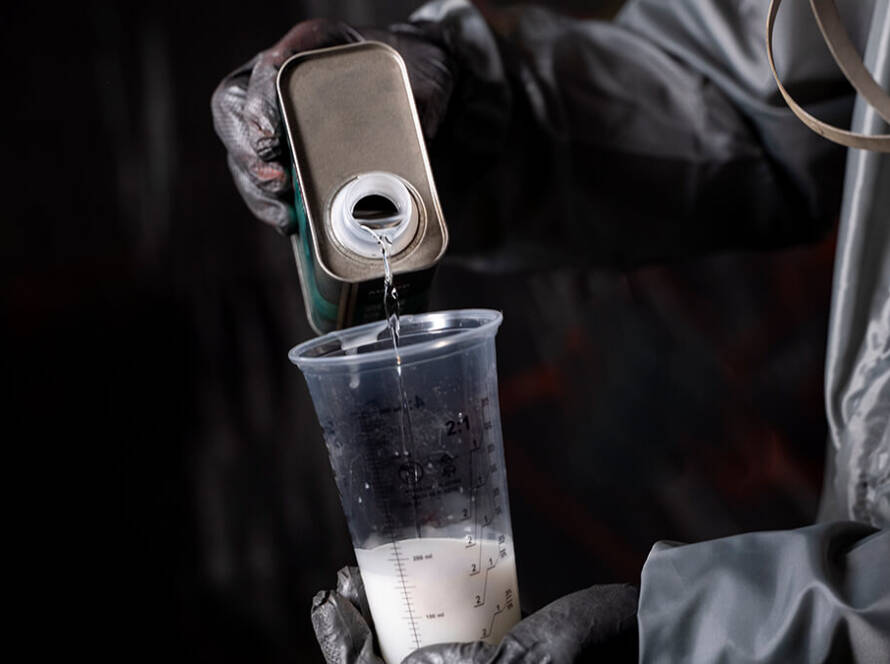
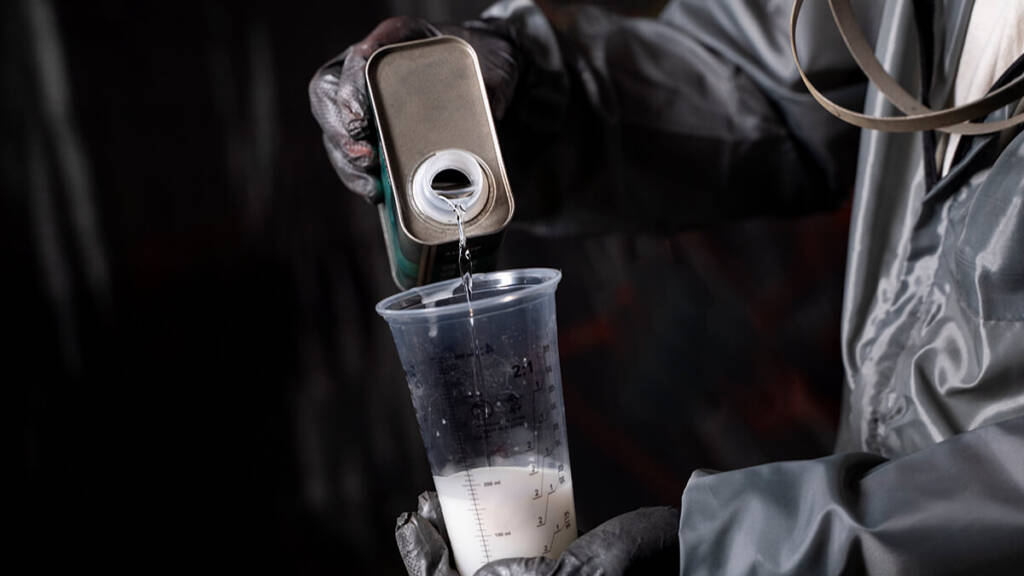
Ferrari waterborne systems use deionized water as the primary carrier instead of high-VOC chemical solvents. They deliver superior metallic clarity, higher pigment concentration, and thinner dry-film profiles that protect sharp body lines. Because water evaporates differently than solvents, applying these coatings requires highly specialized climate controls to stabilize metallic flake suspension and prevent finish defects.
Why Ferrari Uses Waterborne Paint Systems
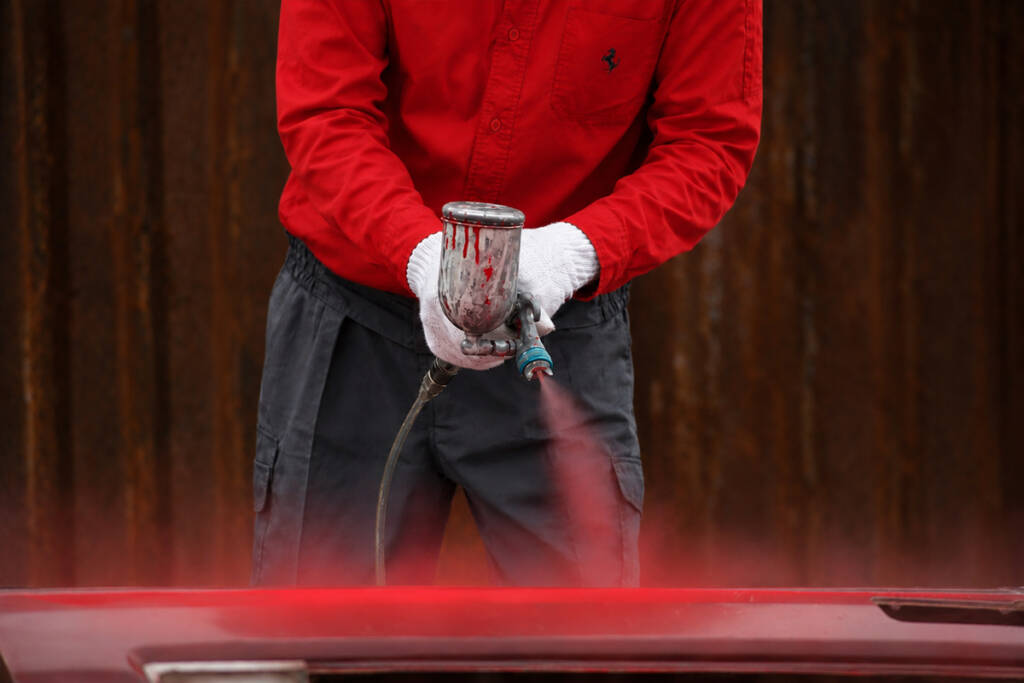
The shift from solvent-based to waterborne coatings at Maranello was driven by strict European environmental legislation — but the result exceeded expectations. Waterborne chemistry delivers a level of structural uniformity and molecular precision that legacy solvents cannot match.
By using water as the carrier for paint particles, Ferrari achieved higher pigment density, thinner film profiles, and more controlled metallic flake orientation than was possible with traditional systems. For modern Ferrari models, waterborne technology is the factory baseline — not an upgrade.
Waterborne Vs Traditional — Technical Comparison
| Attribute | Comparison |
|---|---|
| Carrier medium |
Traditional: acetone, toluene, xylene Ferrari waterborne: deionized water |
| Pigment load |
Traditional: lower — thicker film Ferrari waterborne: extremely high — fewer coats |
| VOC content |
Traditional: 5.0–6.5 lbs/gallon Ferrari waterborne: under 1.5–2.0 lbs/gallon |
| Dry film thickness |
Traditional: 1.0–1.5 mils Ferrari waterborne: 0.5–0.8 mils |
| Metallic flake behavior |
Traditional: prone to mottling Ferrari waterborne: uniform suspension |
| Evaporation profile |
Traditional: rapid chemical flash Ferrari waterborne: climate-dependent |
How Bench Jig Systems Restore Factory Geometry
The most critical technical difference is Dry Film Thickness (DFT). Waterborne basecoats achieve full color coverage at half the thickness of traditional solvent systems.
Traditional solvent basecoat thickness
0–1.5 mil
Ferrari waterborne basecoat thickness
0–0.8 mil
This matters because thick paint builds literally round off the sharp aerodynamic body lines engineered into modern Ferraris. On a car with lines as mathematically precise as an SF90 Stradale, film thickness is a design specification — not just a technical metric.
The Hybrid Clearcoat System
A common misconception is that waterborne means the entire paint system is water-based. On a factory-spec Ferrari, the finish is a precisely engineered hybrid.
01
Top layer
Advanced low-VOC urethane clearcoat — deep mirror gloss, rock-chip resilience, and UV protection. Solvent-based for performance stability.
02
Color layer
Ultra-thin waterborne basecoat — 0.5 mil. Pure color precision and metallic flake orientation preserving sharp body contours.
03
Substrate
Aluminum / carbon fiber panel prepared with factory-spec primer and adhesion protocols before any color application.
Replicating a factory finish requires mastering both chemistries — and knowing exactly where each one belongs in the stack.
Environmental Control & Evaporation Stability
Chemical solvents flash off at a predictable speed regardless of conditions. Water doesn’t. Ambient humidity directly governs how waterborne paint dries — and what the finish looks like when it does.
Too humid, the water stalls and the paint sags. Too dry, it flashes before the particles can settle smoothly. This is why waterborne paint demands an engineered cleanroom with a locked climate, forcing the water to evaporate on a perfect, controlled curve at every stage — and why Ferrari refinishing cannot happen in a conventional shop.
Why Metallic Orientation Matters
The visual depth of Ferrari metallic shades — Grigio Silverstone, Rosso Formula 1 2000 — comes entirely from how microscopic aluminum and mica flakes orient themselves as the paint dries, controlling “flop”: the way color shifts under changing light angles.
It’s a process with almost no margin for error, which is why Ferrari paint matching demands more than color calibration alone.
Traditional solvent drying
Chaotic flake nesting — rapid chemical flash causes flakes to dry at random angles, producing blotchy mottling visible across the panel.
Waterborne controlled drying
Uniform flake alignment — slower, controlled evaporation allows flakes to lay perfectly flat and parallel, producing even reflective depth across the entire silhouette.
Why Waterborne Paint Can't Be Spot-Repaired
WHY PATCH REPAIRS FAIL ON FERRARI FINISHES
Waterborne coatings have an ultra-thin dry film profile and hyper-dense pigment layout. Any attempt to patch a small zone creates a visible edge map — newly applied metallic flakes sit at a slightly different height and orientation than the surrounding factory paint. Under direct sunlight, this reads as a dark shadow or mismatched ring around the repair zone.
A certified repair requires the entire panel to be cleared and refinished as a single, unbroken surface — not patched.
Voc Regulations & Manufacturing Standards
The shift to waterborne coatings is tied directly to global compliance. Traditional solvent paints release high VOC volumes as they dry. European manufacturing standards enforce strict caps that shaped Ferrari’s Maranello production line redesign.
For a factory-certified coachworks facility, using identical low-VOC waterborne systems isn’t just environmental responsibility — it’s an administrative requirement to maintain alignment with Ferrari’s global build standards.
Durability, Gloss & Long-Term Finish Stability
Early waterborne formulations had durability concerns. Modern paint engineering has reversed that entirely.
Film flexibility
Once water evaporates, the remaining film is highly flexible — expanding and contracting alongside carbon fiber and aluminum panels through extreme thermal cycles without cracking.
UV resistance
Combined with the factory urethane clearcoat, the system delivers exceptional UV stability and long-term gloss retention under years of real-world exposure.
Color depth retention
The tighter molecular structure of waterborne coatings preserves pigment alignment over time — maintaining the original factory depth and flop characteristics far longer than legacy solvent systems.
Why Waterborne Refinishing Needs Specialized Facilities
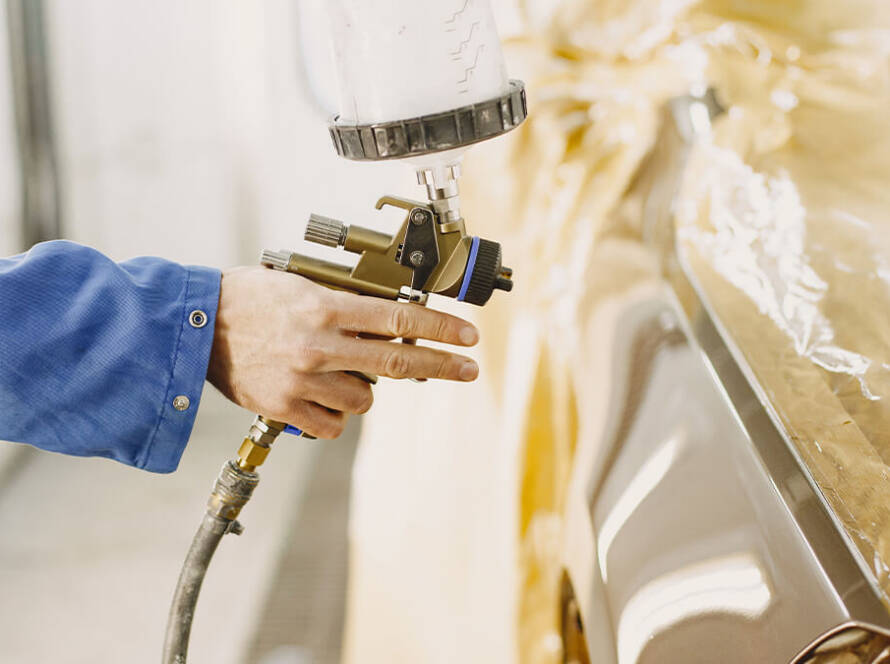
Working with waterborne chemistry requires fundamentally different shop infrastructure than legacy solvent setups — the airflow systems, humidity controls, and curing equipment that make Ferrari aluminum repair possible simply don’t exist in conventional collision shops.
01
Air-acceleration systems
Overhead blowers and venturi air jets sweep high-velocity dry air across panels between coats — mechanically forcing water evaporation.
02
Non-corrosive fluid infrastructure
Waterborne paint corrodes standard steel components while liquid — stainless steel fluid lines, composite spray guns, and plastic piping are required throughout.
03
Locked climate control
Humidity and temperature must be mechanically regulated throughout every coat — not approximated from ambient shop conditions.
04
Isolated non-ferrous environment
Steel contamination from nearby work corrodes exposed aluminum substrates — complete material isolation is mandatory before any waterborne coat is applied.
FAQS About Waterborne Paint Systems
Why does Ferrari use waterborne paint?
Waterborne systems reduce VOC emissions while improving metallic clarity, pigment density, and finish precision.
Why is paint thickness important on a Ferrari?
Excessive paint thickness softens sharp body lines and alters the crisp aerodynamic surfacing engineered into the vehicle.
Why does humidity matter during refinishing?
Humidity directly affects how waterborne coatings evaporate, level, and orient metallic flakes across the surface.
Is Ferrari clearcoat also waterborne?
No. Modern Ferrari finishes typically combine a waterborne basecoat with an advanced low-VOC urethane clearcoat.
Why can’t Ferrari waterborne paint be spot-repaired?
Small patch repairs create visible edge mapping and inconsistent metallic orientation under direct lighting.
Can improper refinishing affect resale value?
Yes. Incorrect paint texture, metallic flop, or film thickness can negatively affect originality and collector confidence.
Preserving Ferrari Finish Authenticity
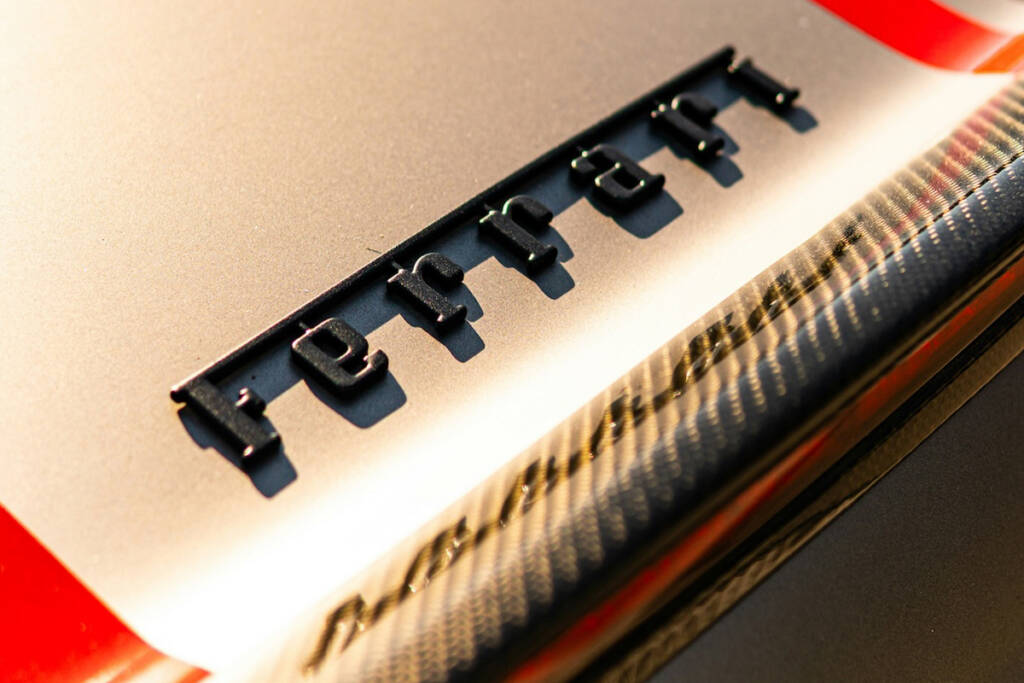
In the luxury car space, authenticity is everything. Any deviation in paint thickness, edge sharpness, or metallic flop signals an aftermarket repair to appraisers and collectors alike.
Mirroring Maranello's exact waterborne chemistry, application tooling, and environmental parameters ensures the car's visual narrative remains flawless from the day it leaves Italy through every chapter of its life on the road.
REPAIR INSIGHTS