Home > Blog > Bench Jig System > Structural Damage on a Car: Repair or Replace?
Share this post:
Quick Takeaways
- What it is: Damage to the frame, pillars, floor, or crumple zones that hold the car together
- Repair vs. replace: Bends can often be straightened; kinks, cracks, and heat-damaged parts get replaced
- Material matters: Steel, aluminum, and carbon fiber each follow different repair rules
- Proof required: A proper repair is measured against factory dimensions and documented
Table of Contents
Structural damage on a car means a crash reached the parts that hold the vehicle together and protect you in an impact: the frame rails, pillars, floor pan, and crumple zones built to absorb energy. Unlike a dented door or a scraped bumper, it changes how the car drives and how well it protects you in the next collision.
Most structural damage can be fixed, but fixed doesn’t always mean straightened. Whether a part is repaired or replaced depends on the material, how badly it’s deformed, and what the manufacturer’s repair procedures allow. If you’ve just been in a crash, start with what to do after a car accident in Florida, then come back here to understand the repair.
What Counts as Structural Damage on a Car?
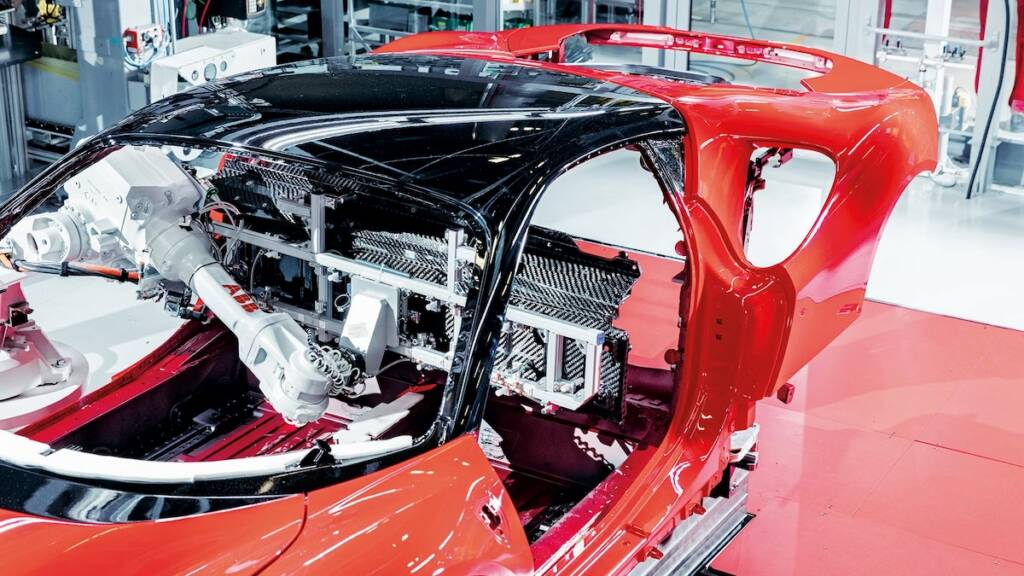
Structural parts are the skeleton. On most modern cars there’s no separate frame; the body itself carries the load. That makes all of these structural:
- Frame rails: the main beams running front to back that carry crash energy.
- Unibody or space-frame: the welded or bonded shell that doubles as the frame.
- Pillars and roof rails: the posts and beams that protect the cabin in a rollover.
- Rocker panels and floor pan: the sills and floor that tie both sides together.
- Strut and shock towers: where the suspension mounts, so damage here throws off alignment.
- Radiator core support and bumper reinforcements: the first line of crash absorption.
- Crumple zones: sections engineered to fold in a set pattern during an impact.
Frame rails follow their own measuring and straightening process, which we cover on our car frame repair page.
Structural vs. Cosmetic Damage: Signs to Watch For
Cosmetic damage stays on the surface. Structural damage often hides behind panels that look fine. Any of these is a reason to get the car measured:
- Doors, hood, or trunk that don’t close smoothly or line up
- Panel gaps that are wider on one side than the other
- The car pulls, or the steering wheel sits off-center after an alignment
- Fast or uneven tire wear
- Wrinkled metal or cracked sealer in door jambs, the trunk floor, or the engine bay
- Any airbag deployment
- Driver-assist warning lights, since many sensors mount to structural parts
You can’t confirm it by eye. Collision energy travels through the structure and can shift mounting points far from where the car was hit. Only a measurement against factory dimensions tells you where the car actually stands.
Been in an Accident?
Worried the Damage Goes Deeper?
We inspect, measure, and document structural damage on luxury and exotic vehicles, and we can bring your car to our Pompano Beach shop on an enclosed flatbed.
Repair or Replace: How the Decision Gets Made
The manufacturer decides, not the shop. Every automaker publishes repair procedures that spell out which parts can be straightened, which must be replaced, and where a replacement part may be joined. A good shop works from those procedures on every structural repair.
Bend or kink? The industry rule of thumb is simple: if it’s bent, it may be repairable; if it’s kinked, replace it. A bend is a smooth deformation that can return to shape without heat. A kink is a sharp fold that has already stretched the metal past its limits.
Material changes everything. A steel rail on an economy car and an aluminum rail on an exotic follow very different rules. Replacement parts matter too. See why OEM vs aftermarket parts makes a difference on structural repairs.
How Material Changes the Repair Call
General patterns. The final decision always follows the manufacturer's procedure for that specific part.
Most common
Mild & High-Strength Steel
Often repaired: smooth bends that pull back to factory dimensions on a bench.
Replaced: kinks, tears, or parts the manufacturer lists as replace-only.
Pillars & safety cage
Ultra-High-Strength Steel
Rarely repaired: most automakers prohibit straightening or heating it.
Replaced: almost always, joined only at approved locations.
Luxury & exotic
Aluminum
Sometimes repaired: minor deformation, using approved cold methods in a contamination-free area.
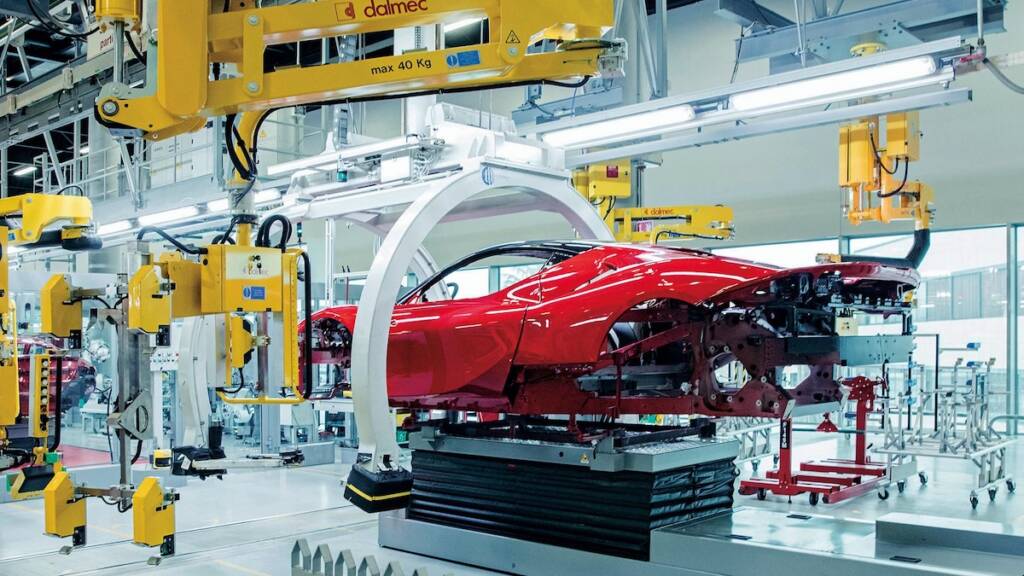
Replaced: cracks, kinks, or heat exposure. Some makers, including Ferrari, require full module replacement.
Supercar structures
Carbon Fiber
Sometimes repaired: non-structural panels and surface damage.
Replaced: structural carbon parts, per the manufacturer's procedure.
Why Cutting and Welding Can Weaken a Structure
Sectioning means cutting out a damaged section and joining in a new piece. On many steel cars it’s an approved repair, but only at the exact locations the manufacturer specifies. Cut anywhere else and you change how the car handles crash energy.
Heat is the hidden risk. Welding creates a heat-affected zone where the metal’s grain structure changes. On structural aluminum, that zone can lose up to roughly half its designed strength, creating a weak point that may not show up until the next impact.
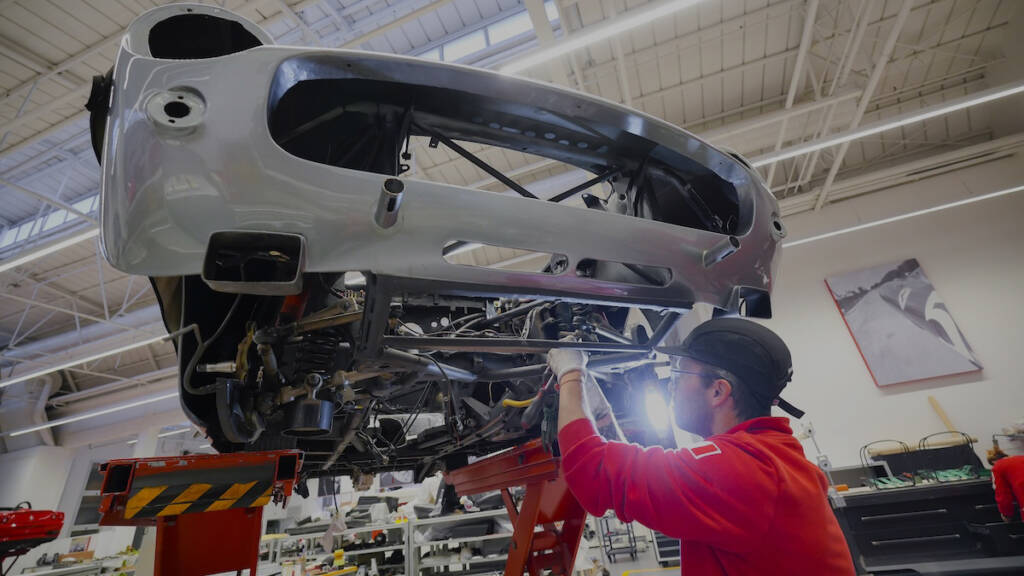
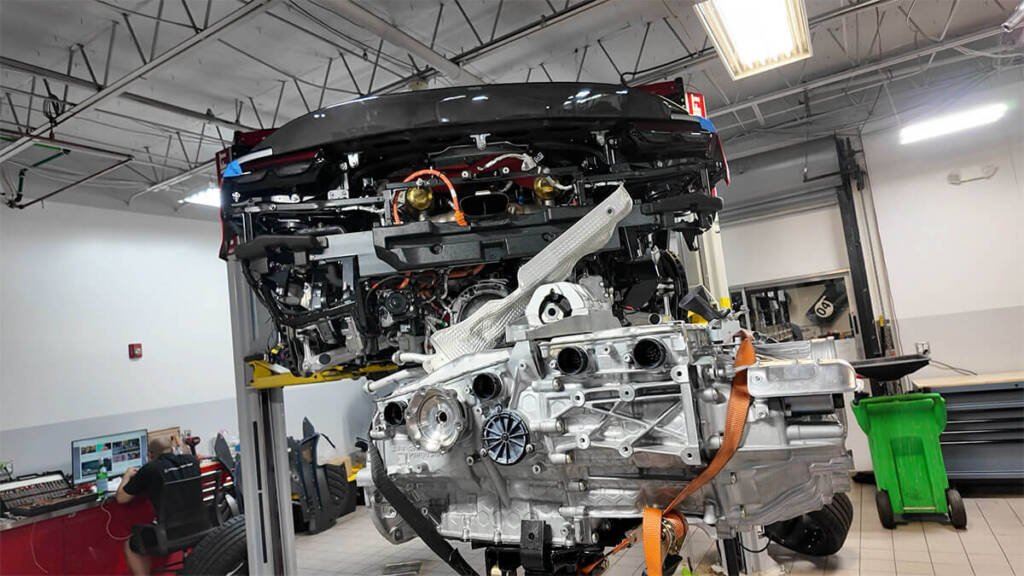
Ferrari is a clear example. Its aluminum space-frames are engineered as continuous load paths, so Ferrari procedures don’t allow mid-span cuts. Damaged modules are replaced at factory seams and joined with structural adhesive and self-piercing rivets instead of welds. This kind of discipline is what separates luxury car collision repair from a standard body shop job.
How Structural Repair Is Done Right
A correct structural repair follows the same sequence every time:
- Teardown: panels and trim come off so the structure itself can be inspected.
- Measure: the car is anchored to a fixture bench and checked against factory reference points.
- Repair or replace: each damaged part follows the manufacturer’s procedure, with no shop-floor shortcuts.
- Join correctly: welds, rivets, or adhesives go only where and how the procedure allows.
- Re-measure and document: final dimensions are recorded for you and your insurer.
- Refinish and recalibrate: corrosion protection, car paint repair, and ADAS calibration for any sensors that were moved.
Structural Damage, Resale Value, and Insurance
It can follow the car. Structural damage often shows up on vehicle history reports, and a well-documented repair is what reassures a future buyer. See what that documentation should include in our guide on whether frame damage can be repaired. If another driver caused the crash, a diminished value claim may recover some of the lost value.
Collision coverage normally pays for the repair when the damage came from the accident. Florida drivers can choose their own body shop, and keeping your car on the road while it’s being repaired is easier with rental assistance lined up early.
FAQs About Structural Damage
Can you drive a car with structural damage?
It’s not recommended. A damaged structure won’t absorb a second impact the way it was designed to, and shifted mounting points can affect steering, braking, and airbag timing. Have it towed and inspected before driving it again.
Can structural damage on a car be fixed?
In most cases, yes. Some parts can be straightened back to factory dimensions, while others must be replaced. The manufacturer’s repair procedures and the material decide which applies.
Is structural damage the same as frame damage?
Frame damage is one type of structural damage. Structural damage also covers pillars, floor pans, roof rails, strut towers, and crumple zones, which on most modern cars all work together as the frame.
Will structural damage show up on Carfax?
It often does when an insurer, inspection, or repair record reports it. That’s why documenting a factory-correct repair matters when you sell.
Does insurance cover structural damage repair?
Collision coverage generally pays for structural repairs caused by an accident, subject to your deductible. In Florida, you choose the body shop, not your insurer.
Is a car with structural damage totaled?
Not fully. Panel gaps and warning lights can hint at it, but confirming structural damage takes removing panels and measuring the car against factory dimensions.
Structural Repair in Pompano Beach
Get a Straight Answer on Your Car's Structure
Every structural repair starts with a measurement. We assess, repair, and document structural damage on luxury and exotic cars as part of our frame repair work.