Home > Blog > Paint Refinishing > How Ferrari Paint Matching Works
Share this post:
Quick Takeaways
- Formula synchronization: Ferrari color accuracy depends on factory PPG variant formulas
- Optical metamerism: Multi-angle scanning compensates for dramatic light-angle color shifts
- Texture profiling: Factory orange peel texture must match adjacent panels precisely
- Radar transparency: Paint thickness calibration preserves ADAS radar functionality
Table of Contents
How does Ferrari paint matching work?
Ferrari paint matching combines original factory PPG formulas, multi-angle spectrophotometer scanning, controlled blending techniques, and micro-texture calibration to replicate the color, depth, and clarity of the original finish.
Multi-stage metallic, pearl, and triple-layer systems require precise spray metrics and clear coat thickness calibration to match factory gloss, orange peel texture, and ADAS sensor transparency limits.
Why Ferrari Paint Matching Is Different
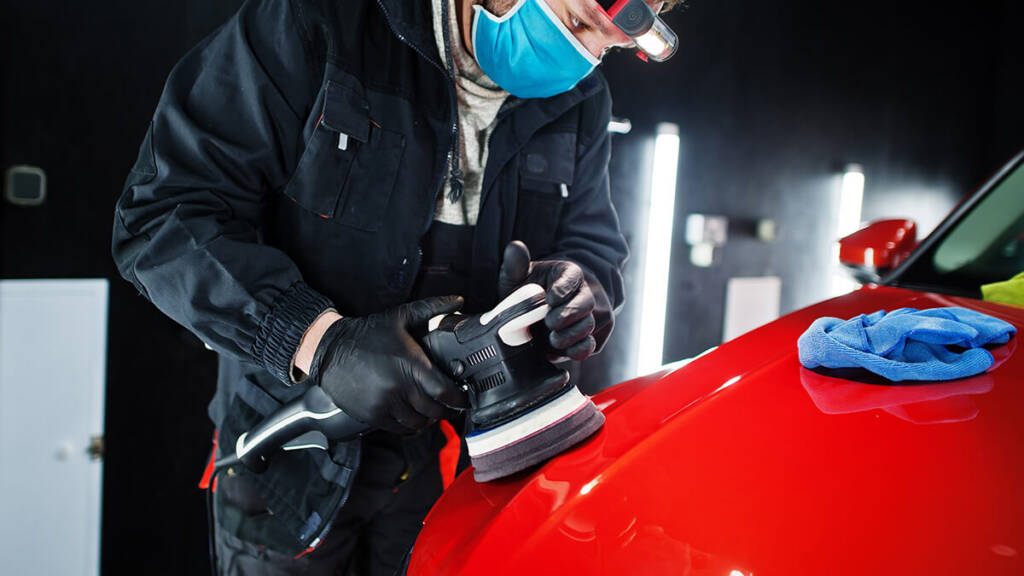
Standard automotive painting is built around high-volume vehicles with uniform, forgiving coatings. Ferrari finishes operate on an entirely different level of visual complexity.
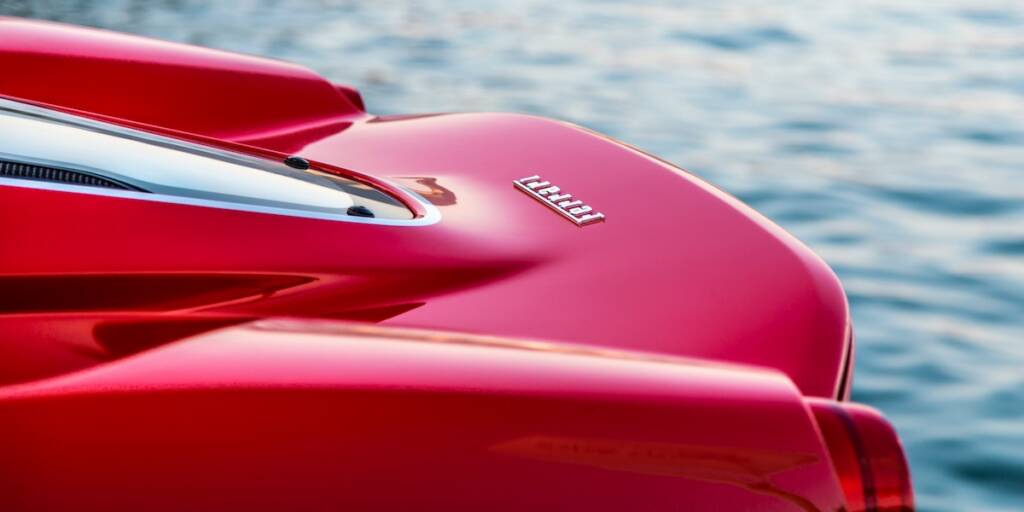
Maranello paint is engineered to maximize body contour illumination — accentuating aerodynamic lines and dramatic curvature. Replicating it requires specialized equipment, extreme patience, and an expert understanding of light interaction.
In the collector market, a mismatched panel or incorrect clear coat texture is an immediate red flag that ruins vehicle provenance.
Understanding Ferrari Factory Paint Systems
Achieving a baseline match requires identifying the exact paint architecture on your specific model. Ferrari finishes fall into three primary classifications.
01
Solid finishes
Deep-pigment coatings like Rosso Corsa (DS 322) or Giallo Modena. Require absolute depth and clarity — any flatness reads as a defect.
02
Metallic and pearl systems
Embedded with micro-fine aluminum flakes or pearlescent mica. The angle, size, and suspended depth of these particles directly control how light reflects off the panel.
03
Triple-layer paintwork
A solid base reflection layer, a translucent color-tinted mid-coat, and a protective clear topcoat. Creates an optical illusion of depth that can only be matched by precisely adjusting film layer build-ups.
Each system demands a distinct approach to Ferrari waterborne paint and coating technology.
Why Ferrari Colors Shift Under Light
The primary challenge in color replication is metamerism — where a repaired panel matches perfectly inside a dark workshop but shifts drastically under natural sunlight or artificial lighting.
Ferrari finishes are designed to display ‘flop’ — color shifts as the light angle changes or as a viewer moves around the vehicle. This is controlled by how metallic or pearl flakes lay within the wet paint layer. Uncalibrated air pressure or a non-standard stroke angle causes flakes to stand vertically, making the repaired panel appear dark or muddy from side angles.
Formula Retrieval & Spectrophotometer Scanning
The process begins with the factory paint code — typically on a sticker beneath the hood or trunk. But a baseline code is rarely enough. Paint batches vary slightly in production, and UV exposure creates subtle weathering shifts over time.
01
Multi-angle spectrophotometer scan
Flashes light at multiple distinct angles to map the exact color profile and flake distribution of the existing finish
02
PPG global database retrieval
Scan data processed through Ferrari’s PPG Industries library — pulling variant formulas that account for aging and production variances
03
Custom formula isolation
Exact shade and formulation confirmed before any mixing begins — not approximated from a standard code
Color Blending, Texture & Surface Uniformity
A successful paint match is determined by texture as much as color. Ferraris leave the factory with a highly specific, minimal surface texture — ‘orange peel’ — created by robotic application systems. Matching it requires calibrating three variables.
| Pneumatic pressure | Spray gun air pressure controls how finely the paint atomizes — preventing the finish from being too smooth or too rough |
| Fluid tip size | Matched precisely to the PPG coating density to ensure uniform film delivery across the panel |
| Solvent evaporation | Specialized reducers control how quickly the wet layer flows out — cloning the factory orange peel of adjacent panels |
Sanding a repaired panel to a perfectly smooth mirror finish is a critical error. If adjacent panels have factory texture, a smooth repair stands out as an obvious defect.
Color Blending, Texture & Surface Uniformity
Modern Ferraris house ADAS and blind-spot radar sensors directly behind painted bumpers and exterior panels. Paint thickness is a safety specification, not just an aesthetic one.
CRITICAL ADAS PAINT WARNING
Excessive paint film layers block or distort radar wave transmission — blinding the underlying active safety sensors. Total coating build-up must stay within strict mil-spec thickness tolerances. Certified facilities use mil-spec paint thickness gauges at every layer, paired with translucency verification to confirm radar wave transmissibility.
Factory-Correct Curing & Final Inspection
The finish isn’t complete until it’s been cured and verified under controlled conditions. Each stage protects both the cosmetic result and the structural materials beneath it.
1. Infrared thermal curing:
Short-wave infrared lamps ensure deep paint layer stabilization without overheating adjacent structural adhesives or carbon fiber bonds
2. Thermal boundary tracking:
Curing temperatures monitored strictly to protect aluminum structural adhesives and composite bonds from heat exposure
3. Multi-spectrum lighting review:
Vehicle moved to a dedicated inspection tunnel with high-intensity LED grids that simulate varying outdoor lighting environments
4. Multi-angle panel audit:
Master technicians review panel transitions from extreme side angles — confirming seamless color flop, gloss uniformity, and zero edge mapping
All of it depends on factory-controlled environments that generic shops cannot replicate.
FAQS About Ferrari Paint Matching
Why is matching classic Ferrari red so difficult?
Classic shades like Rosso Corsa have multiple historical variants, and solid colors fade unevenly under UV exposure — requiring a custom formula adjustment rather than a basic code mix.
What does a spectrophotometer scan do?
It analyzes color reflection and metallic flake distribution at multiple angles, pulling a custom variant formula from the PPG library that accounts for aging and factory production variance.
Why is a perfectly smooth finish incorrect on a Ferrari?
Ferraris leave the factory with a specific robotic orange peel texture. A repaired panel must match this micro-texture profile exactly — a mirror finish on a textured car reads as an obvious defect.
Can excessive paint thickness block ADAS sensors?
Yes. If primer, base, or clear coat layers exceed manufacturer mil-thickness limits, radar waves are blocked — causing ADAS calibration failure and disabling active safety systems.
What is a triple-layer paint finish?
A multi-stage system with a reflective base, a translucent tinted mid-coat, and a protective clear coat — creating an optical depth that can only be replicated by precisely calibrating each film layer build-up.
Why do painters blend into adjacent panels?
Blending gradually feathers the new color matrix into the original finish across adjacent panels — tricking the human eye into reading the transition as seamless visual continuity.
Preserving Ferrari Visual Integrity
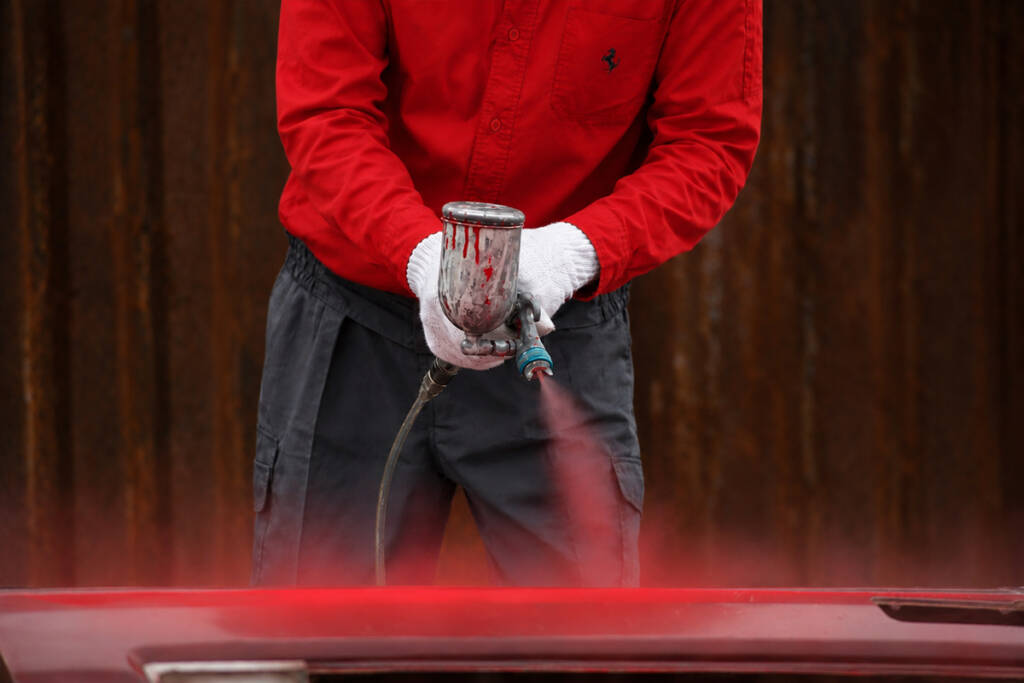
Replicating the optical depth, shifting metallic configurations, and precise texture profiles of a Ferrari finish requires environmental discipline and equipment that generic collision shops cannot sustain.
Factory-certified PPG retrieval, multi-angle metamerism scanning, and mil-spec paint depth management aren't refinements — they're the baseline. See where Ferrari refinishing fits within the full collision restoration process.
REPAIR INSIGHTS